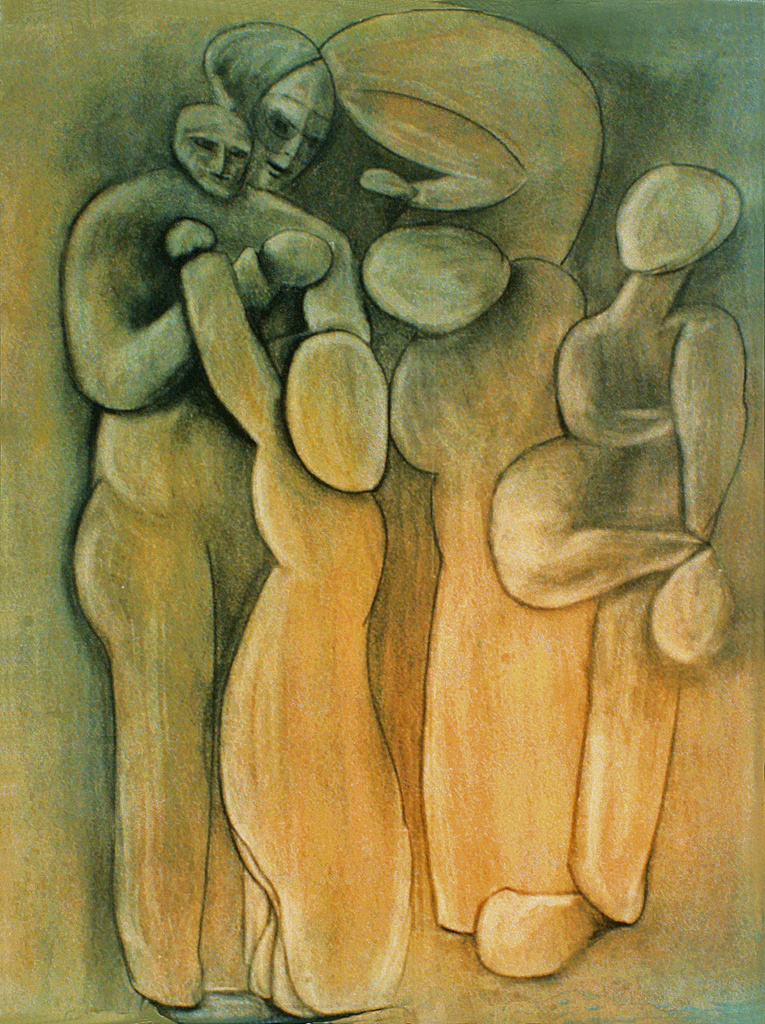
Post Modern Haste
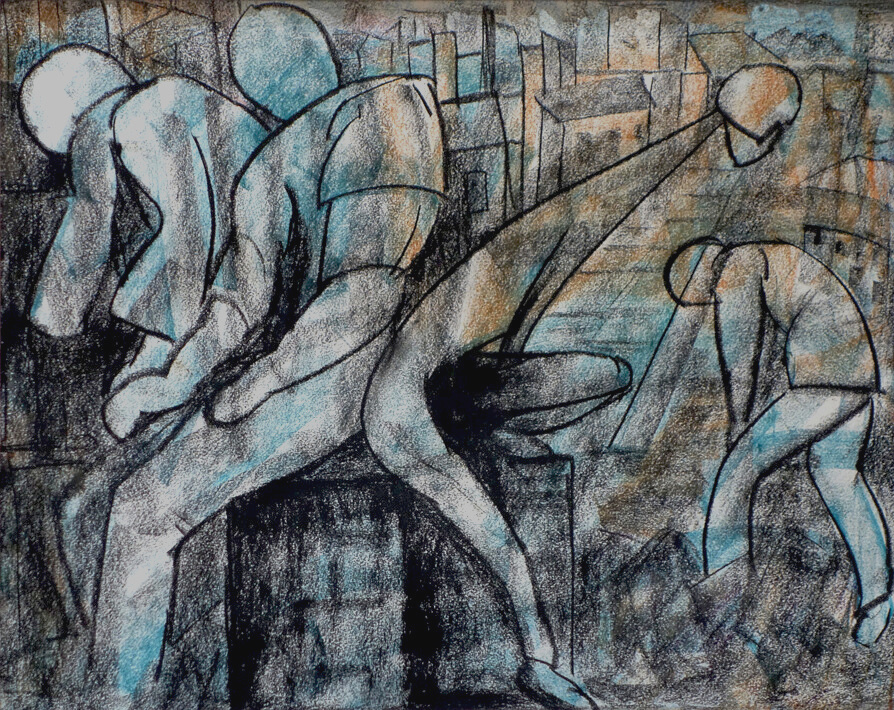
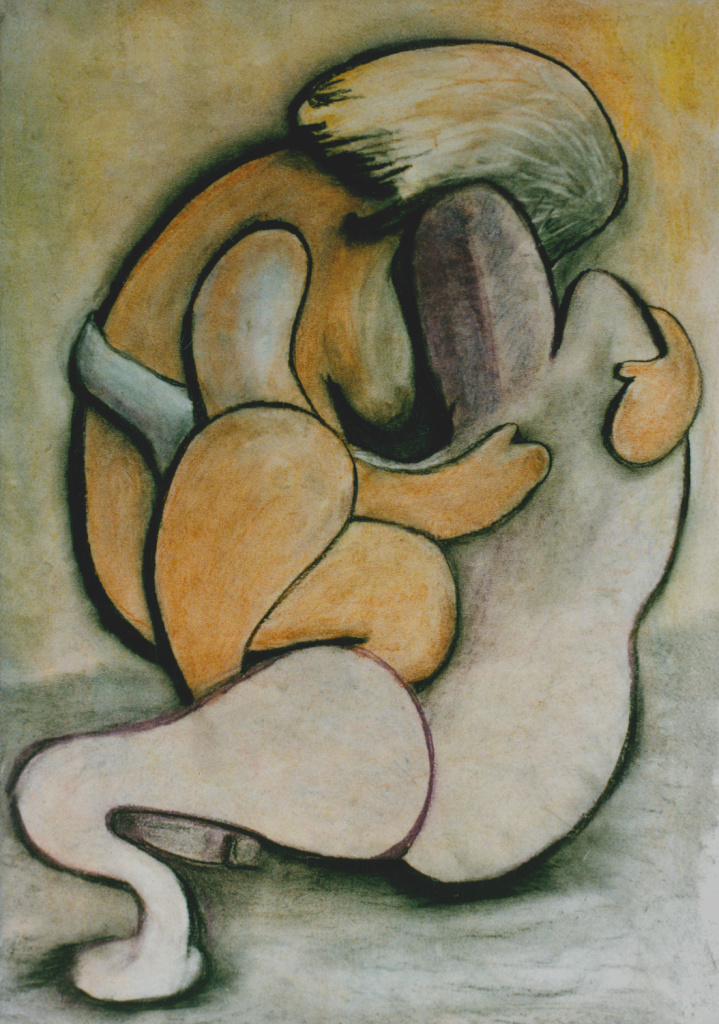
- 1991
- Pastel
- 41.5 x 54.5cm.

It is amazing what all you can do with pastels. Not only depict airy ethereal figures and swaying gravity-mastering movements, like the ballet dancers of Degas, but also give your subject the touch of a pastos oil painting, and even the weighty dark gravity of a Rembrandtian oil canvas.
I have often used the wax-oil-acid-free Faber Castell Polychromos, which are a bit harder than soft pastels but adhere remarkably well to paper or even smoother backgrounds, like pre-treated carton, and allow unusually excellent on-the-spot mixing of colors. Also, they are great for drawing sharp contours. However, for highlighting, I had to use the white soft pastels, from Schmincke, Talons, Roché, or Senelier. Each has its own specificity, which can be exploited to achieve different results. I have rarely used Gouache to highlight; instead, I have used a softer white pastel stick from multiple brands, with almost the same effect, that can be fixed and ultraviolet protected with a good modern fixative, which the old masters did not have access to. Pastels never achieved much popularity, but have always been a niche product. Fortunately, they still are, which ensures the survival of some of these good old, lovely brands.
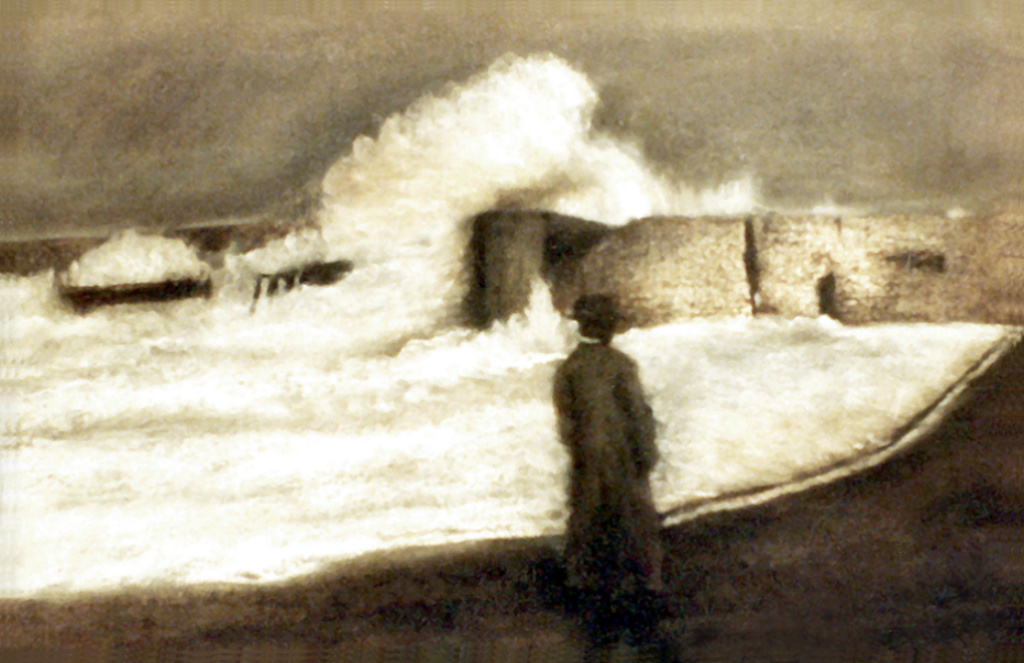
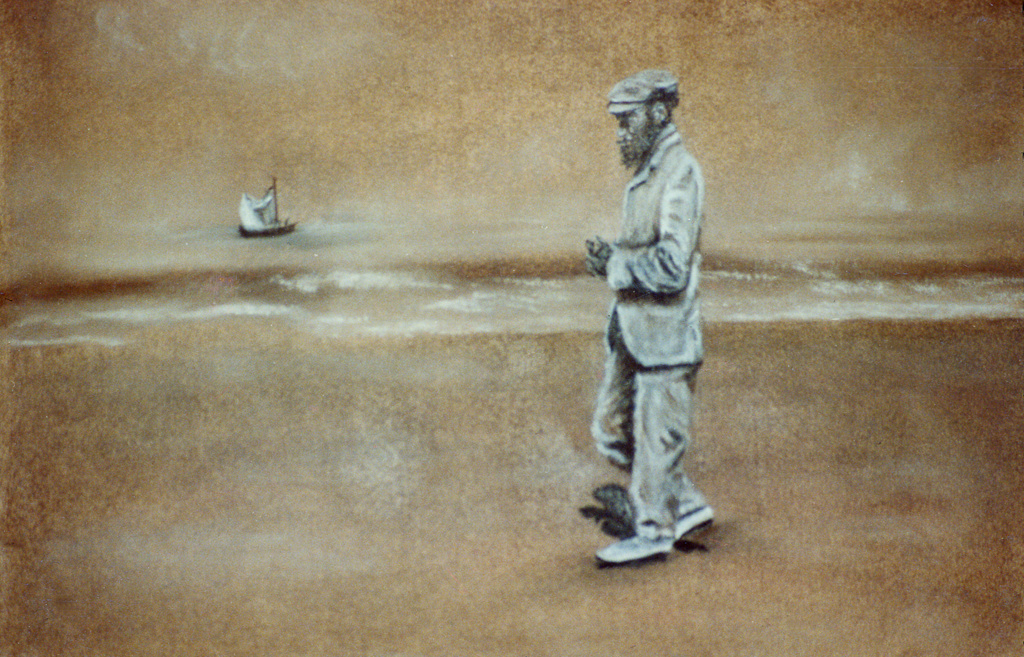
After Jaques-Henri Lartigue
Photo: Zissou at the Adour Bore, Biarritz, 1909
Source: Pantheon Books, NYC, 1986.
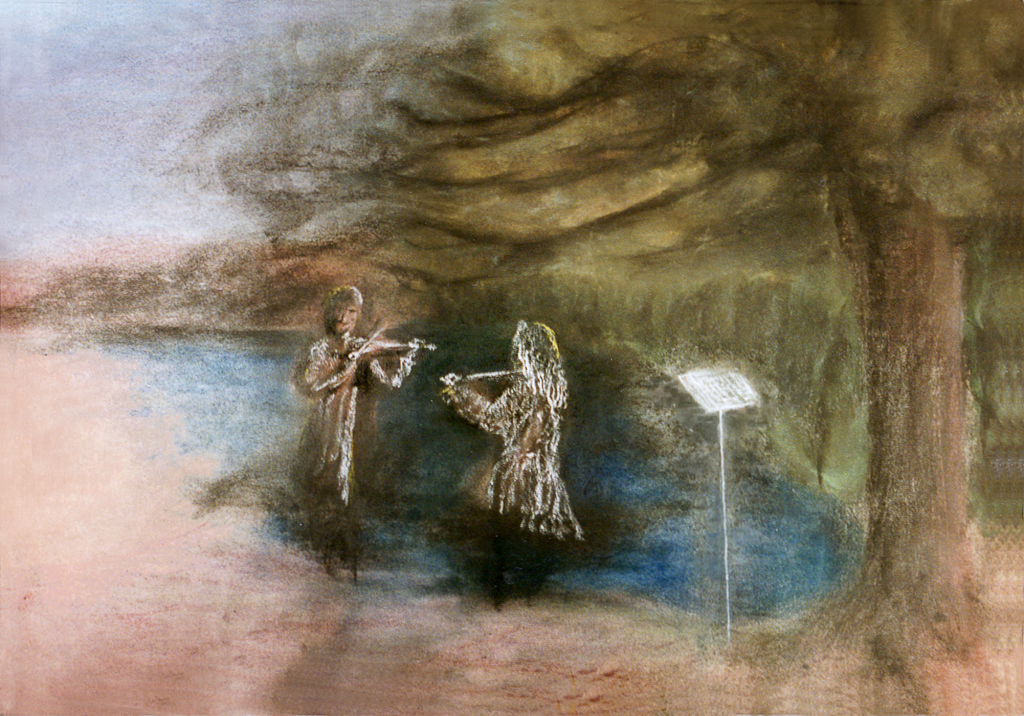
The three pastel copies that I have made of the photographs of Lartigue and displayed here were the result of a memorable visit to an exhibition of his works in the Bass Museum, Florida, USA, 1989. The pictures somehow exuded a subdued, peaceful pastel vibe, even when depicting people in action or dynamic events, like the surge of the tide. Time shots from a time, where the time did not seem to race like modern cars, but trot at a steady pace like the extant but fast disappearing horse carriages. I felt it would be fun to catch a bit of those last moments of an unhurried time and the pastel atmosphere of the photographs.
From a more technical point of view, since the photographs had all predominantly a sepia cum ochre tinge, all I needed was an ochre colored pastel paper to use as a background. This is especially evident in Man on the Beach 2, wherein I have more or less only used white soft pastel for highlighting without much coloring the background. Technically, a minimalistic method of reproduction, enabled by the subdued pastel tinge of the photographs themselves.
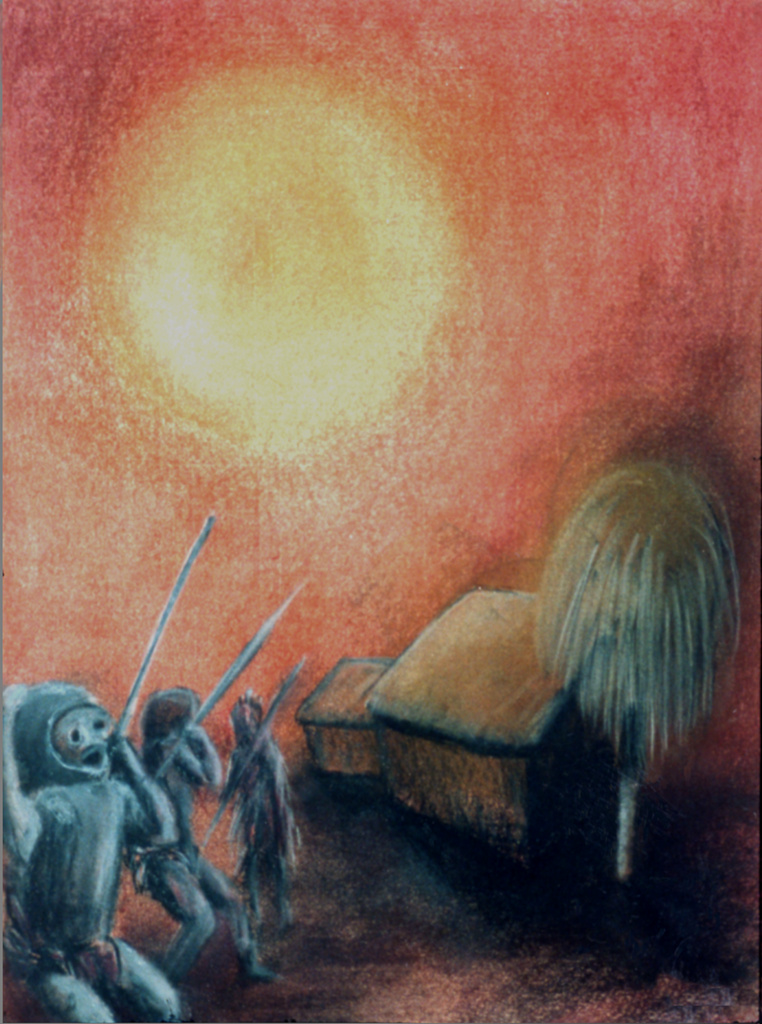
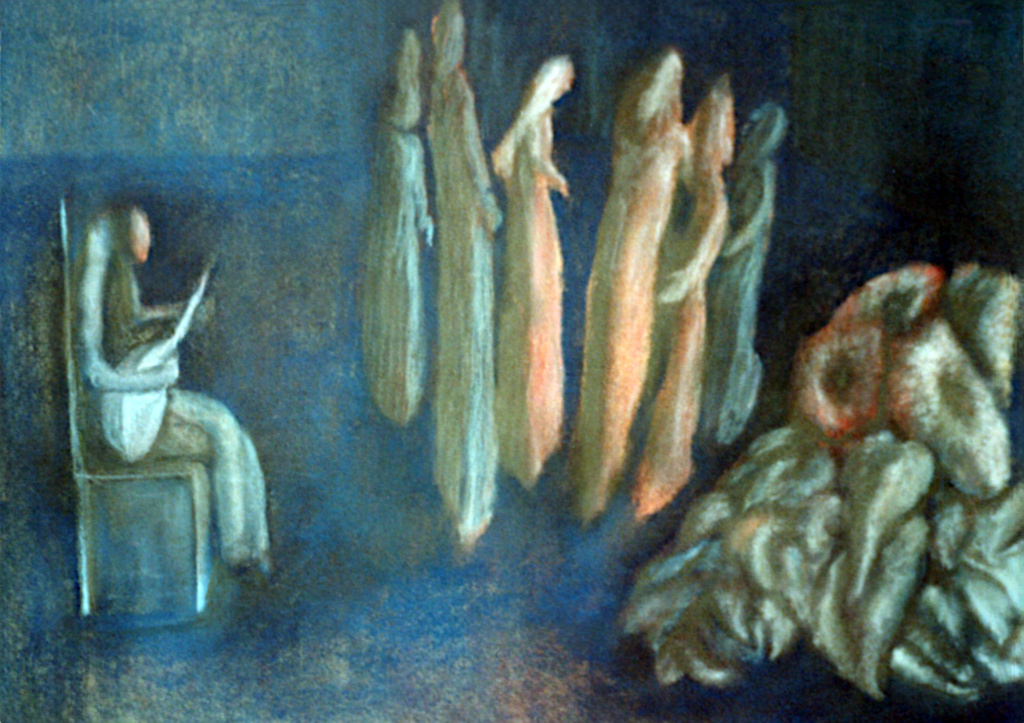
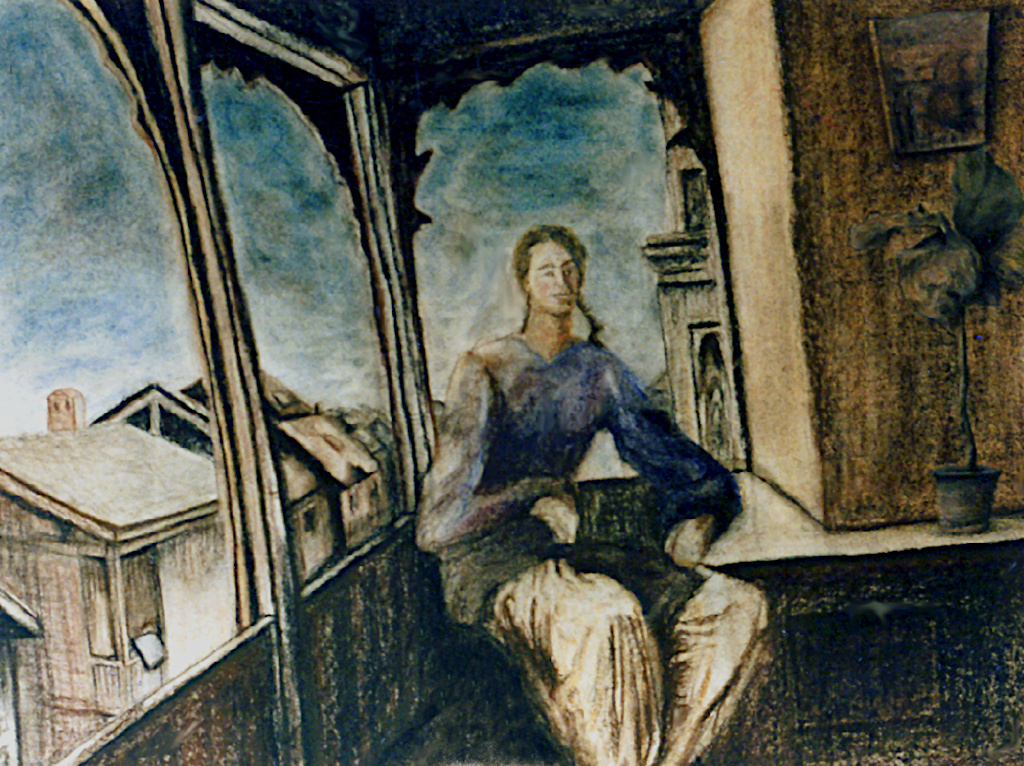
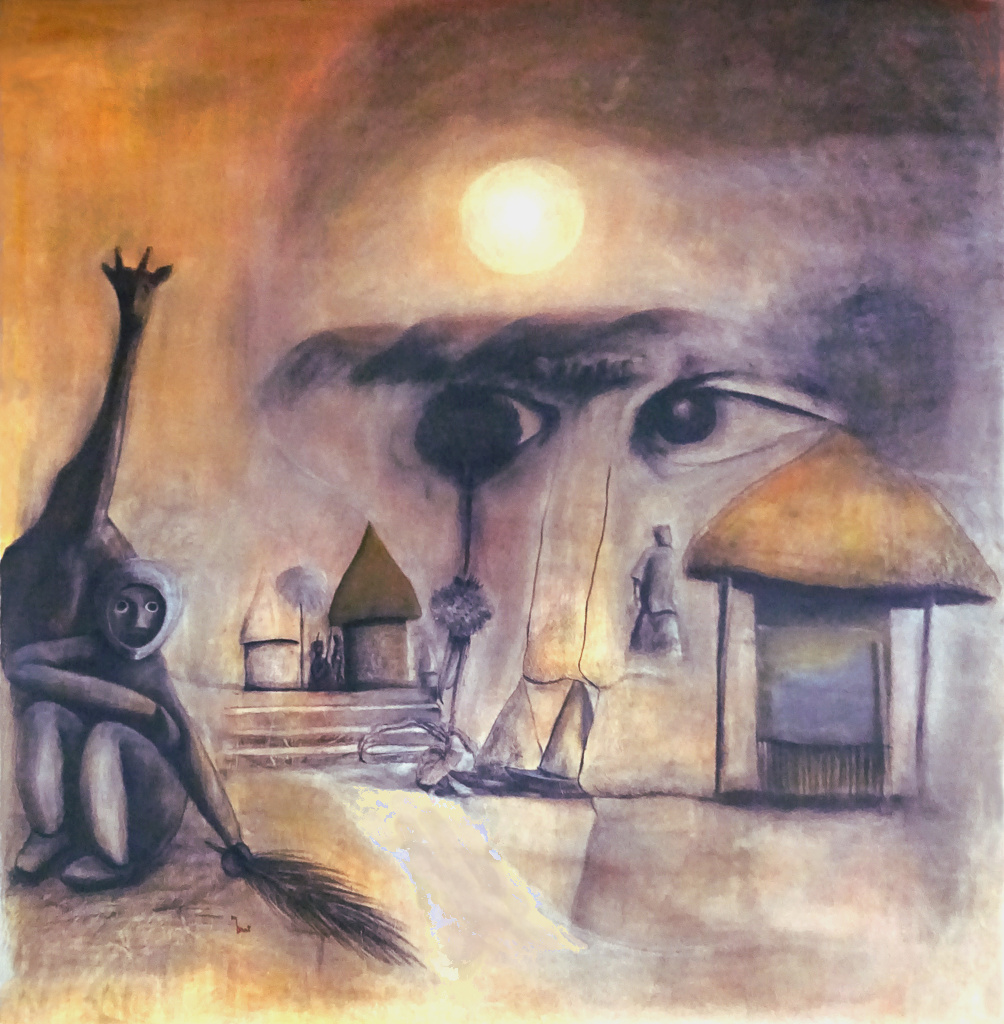
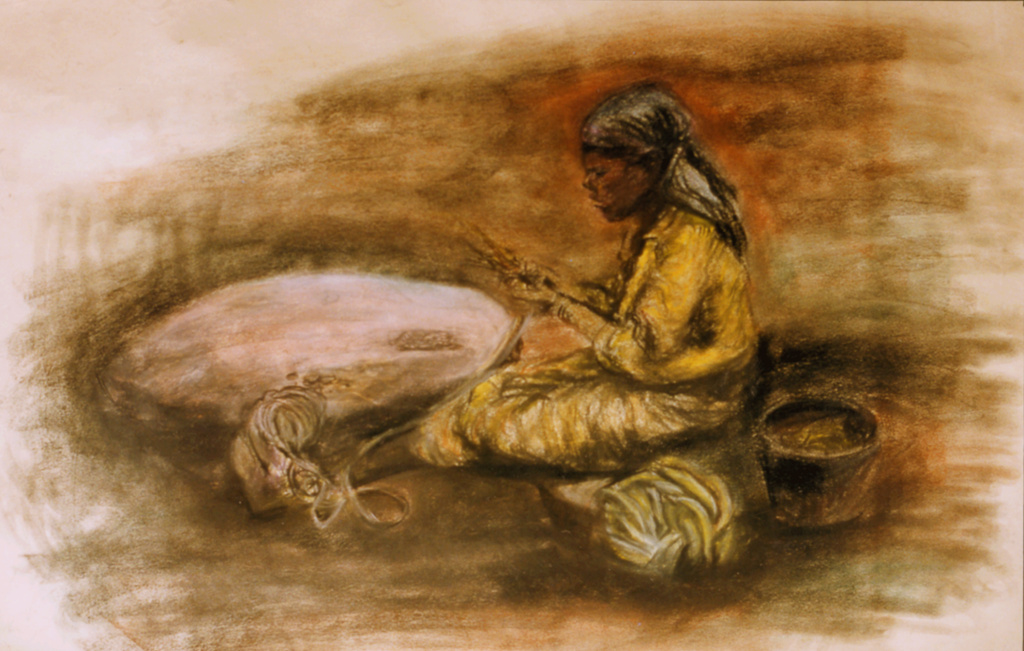
After a photograph, taken by an unknown relative, probably around 1958. Srinagar. Kashmir.
A few handicrafts from Kashmir have been well known internationally since antiquity. The wives of Roman Emperors would proudly display Cashmere garments. However, what is less well known is that Kashmir had up till recently a thriving community of artisans, in woodworking, papier mache with lovely paintings of animals and landscapes, and of course woolen products, apart from the expensive Cashmere, like garments, mats, small carpets, and coverings for bedding and pillows, finely designed with animals and landscapes stichings. It also has a carpet-making industry, amongst others.
Woodworking was well developed and widespread. A late medieval mausoleum of a local king that did not employ any nails still exists; the picturesque houseboats made of Himalayan cedar (deodar); the intricate wood carvings of the houseboat interiors; and the furniture. The woodwork designs could be quite impressive. Lamps, doors, and windows of the old landed gentry had some very intricate hand-carved designs. Many houses had wood panels that you glided up to open instead of windows, as evident here in the drawing, a bit stylized though. However, such work has almost disappeared now. Wood has become very expensive, and the efforts to create a sustainable wood industry are anything but exemplary. And consequently, many of the old crafts and craftsmen are decreasing in numbers. So also the crafts associated with instrument making, like the santoor, which, by the way, Shiv Kumar Sharma developed further, to enable him to play Indian classical music, and that he made more familiar in the West and Japan. You will have to really look hard and wide for some old-time artisans, like Santoor makers. My friend Bernd from Berlin and I once spent a whole day in the old town in Srinagar searching in vain for one.
A detailed description of the drawing is given under the section: Artworks.
Villerville, France
After Jaques-Henri Lartigue
Photo: Cousin Caro & M. Plantavigne (latter not depicted in my drawing), Villerville, 1909
Source: Pantheon Books, NYC, 1986.
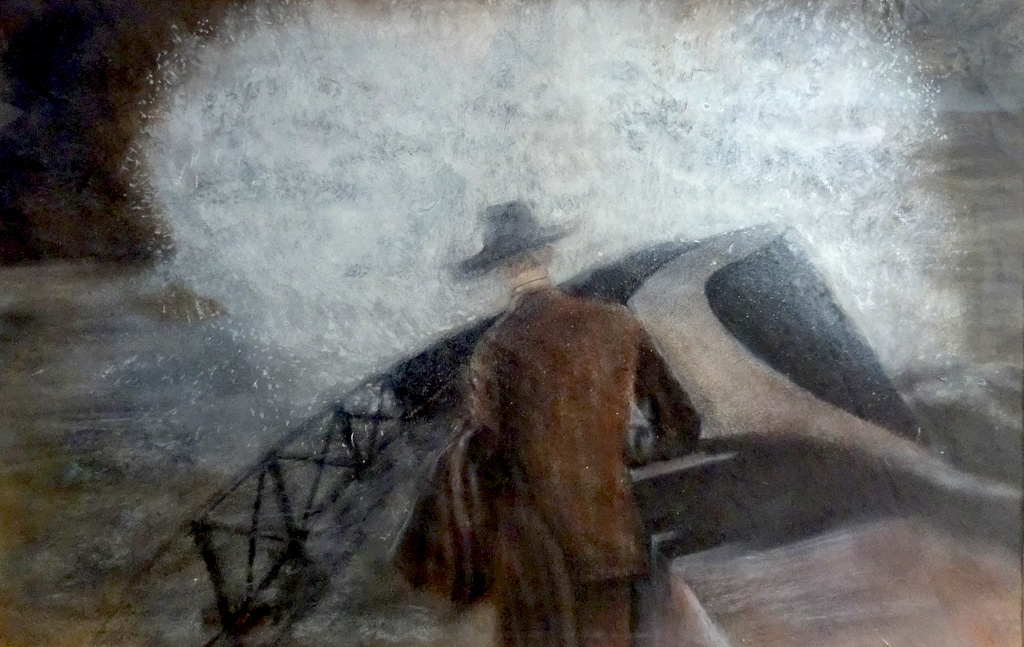
After Jaques-Henri Lartigue
Photo: Rocher de la Verga, Sala, Biarritz 1927.
Source: Pantheon Books, NYC, 1986
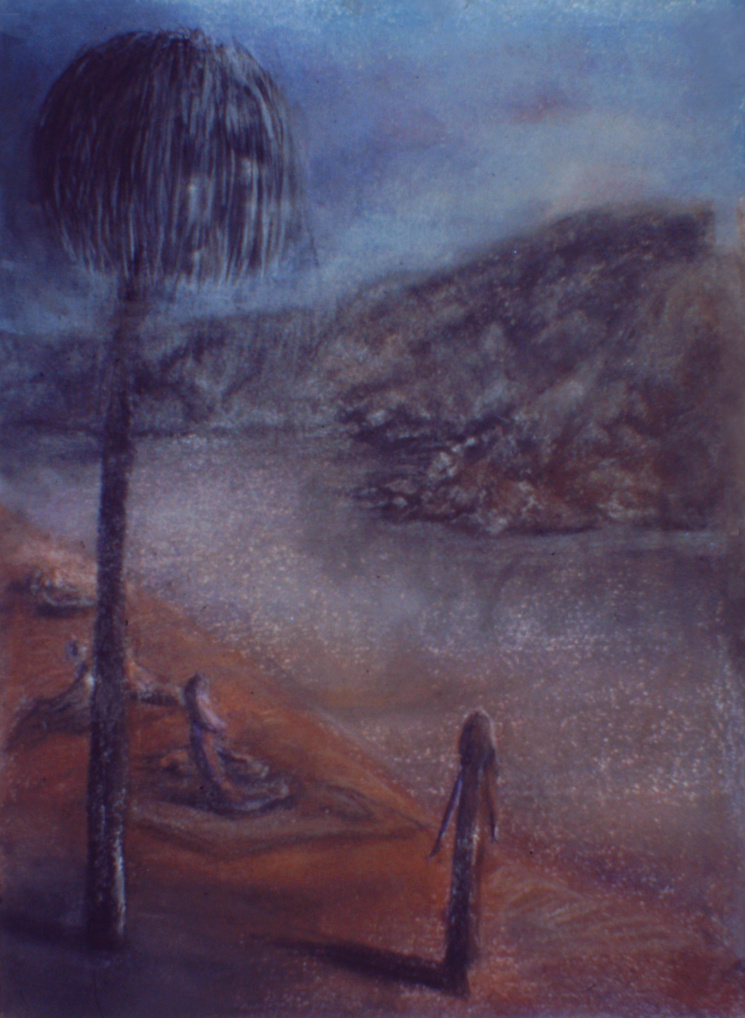
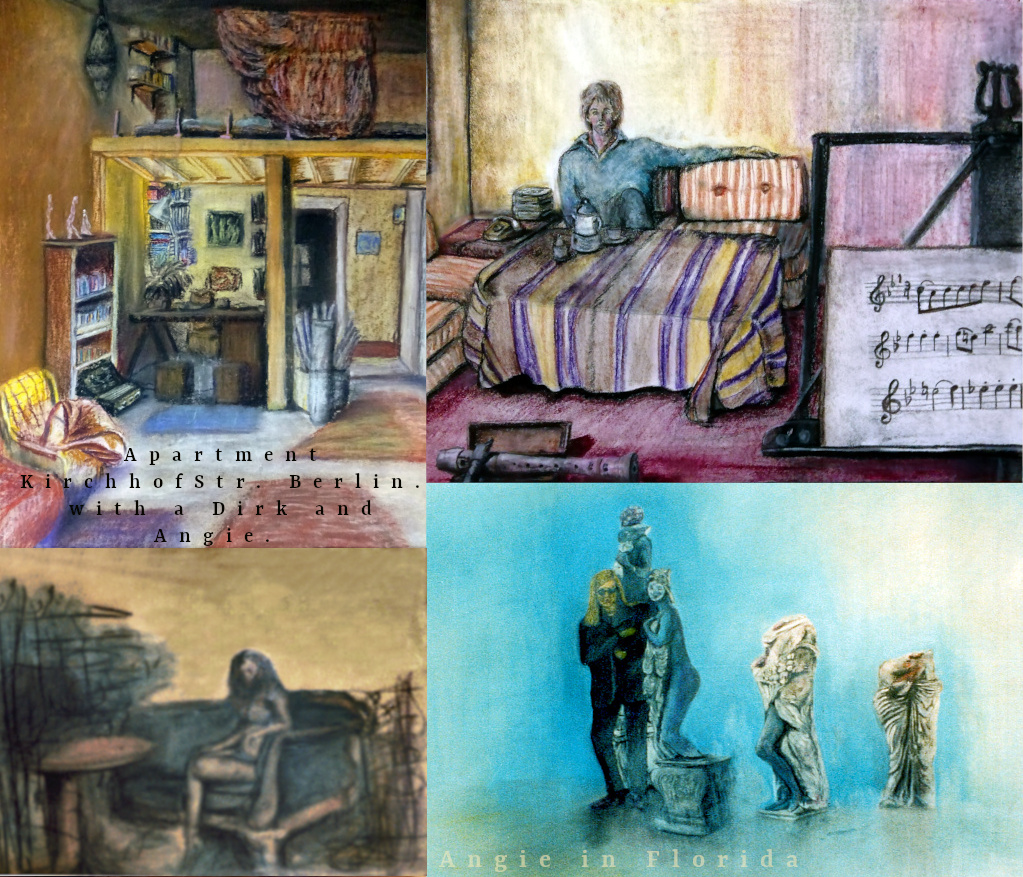
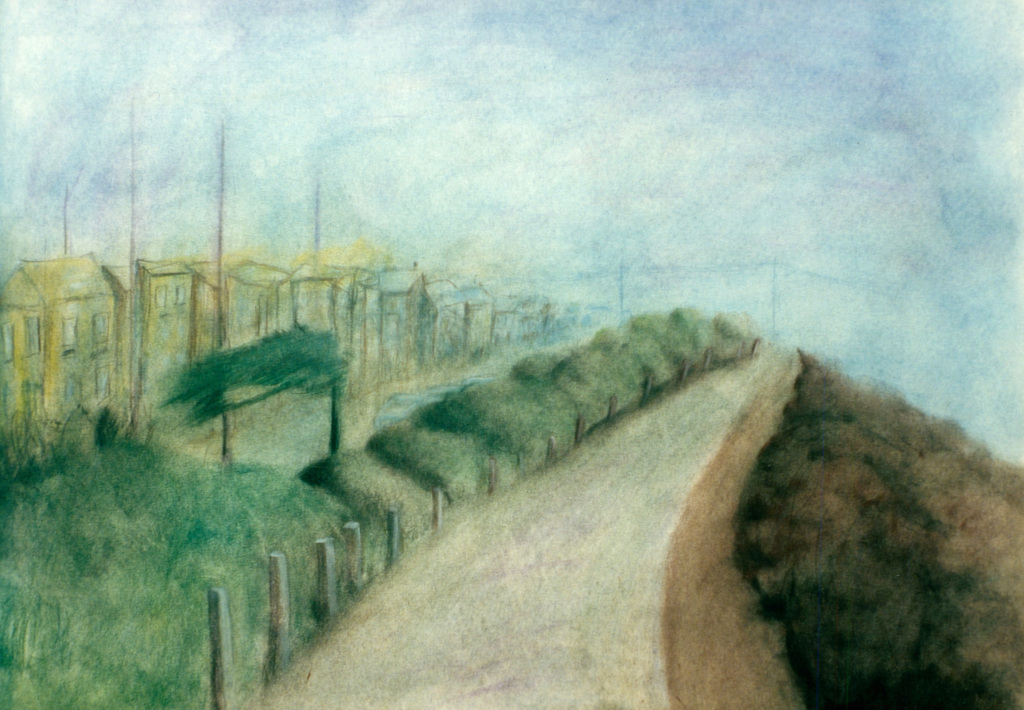
Near Golden Gate Heights. View from the apartment window of my friend Arnim Winkler
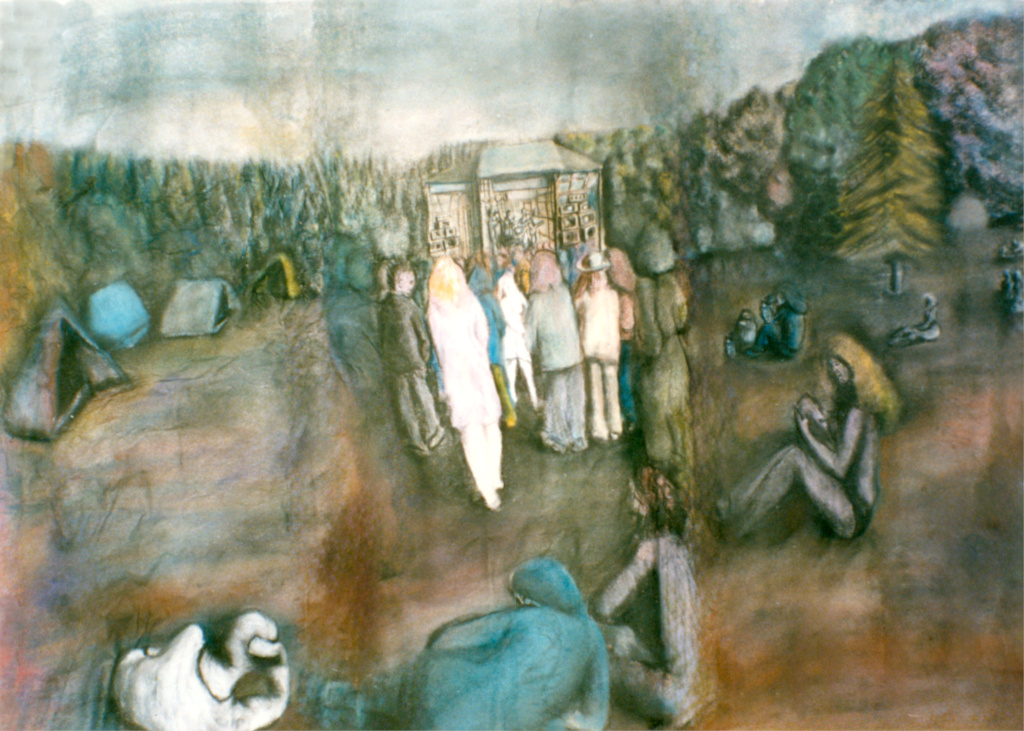
A three-day rock festival in the dense urban industrial region of Germany, the Ruhrgebiet, formerly a coal mining region, where the old man river Ruhr still meanders through extant green landscapes and pastures. I was there with a group of friends from the region. Unfortunately, it was raining on our arrival.
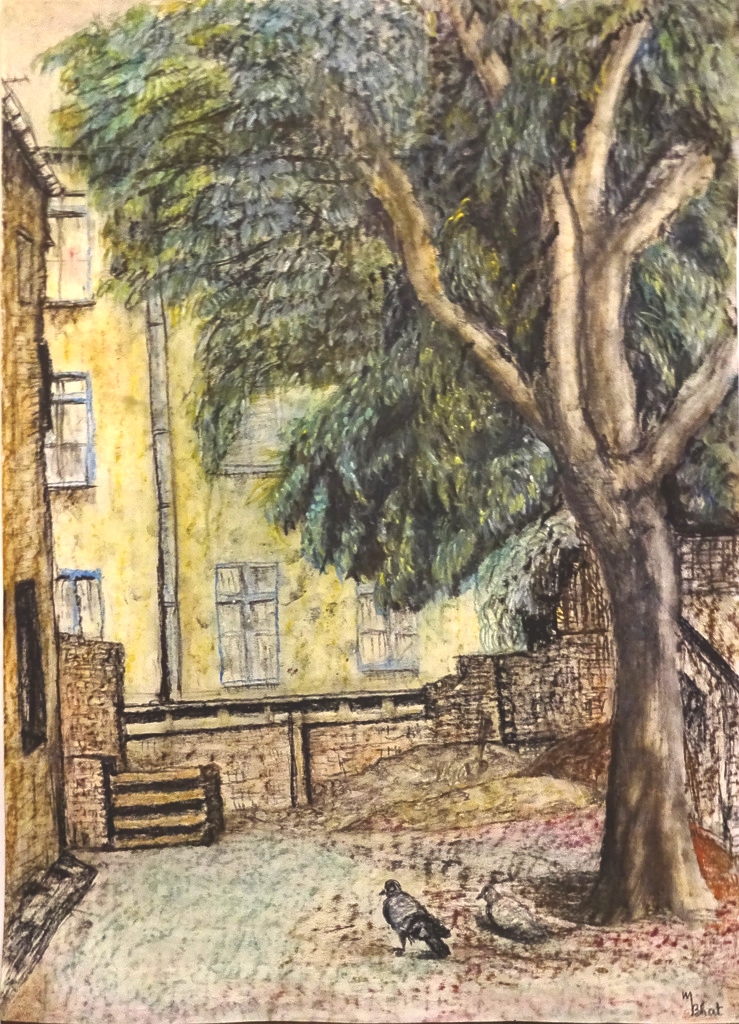
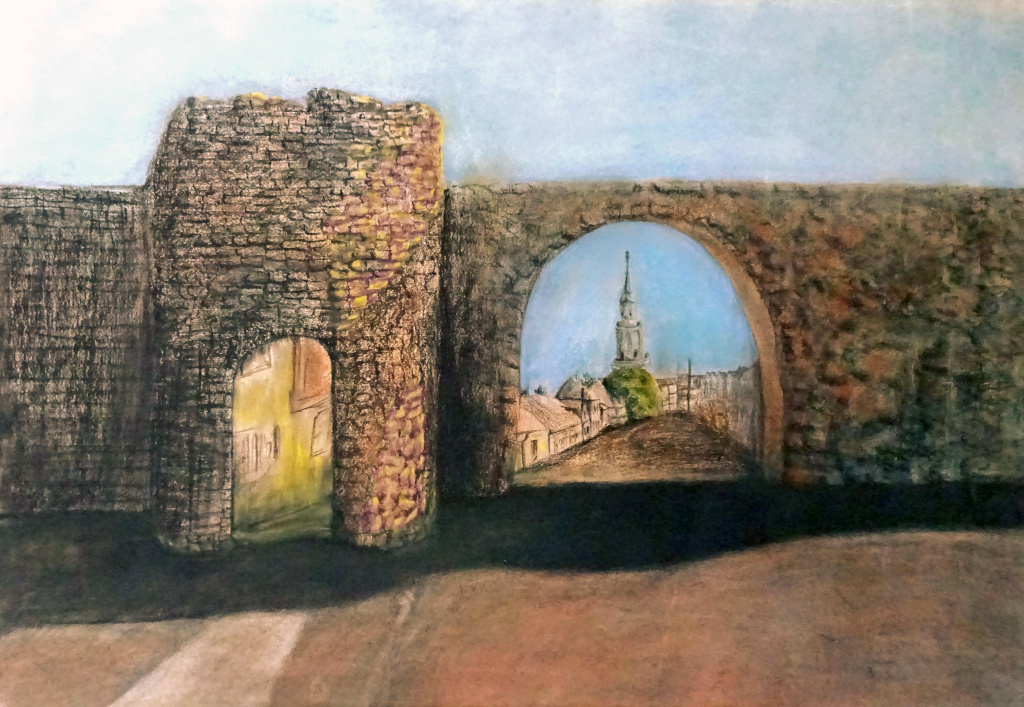
Sobald das Geld im Kasten klingt, die Seele aus dem Fegefeuer springt.or its variant:
Wenn das Geld im Kasten klingt, die Seele in den Himmel springt.In English:
As soon as the coin in the coffer rings, the soul from purgatory springs.Well, this seemed to have prompted Martin Luther to finish off his Ninety Five Theses, which he would famously pin at the Church in Wittenberg! And man did it set the ball rolling!