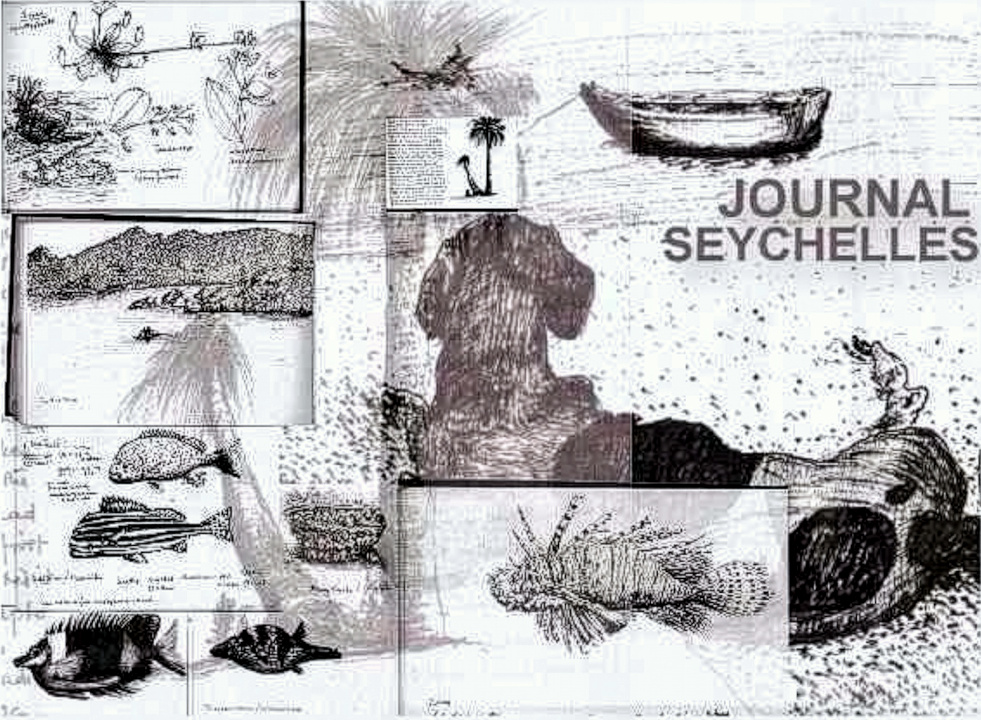
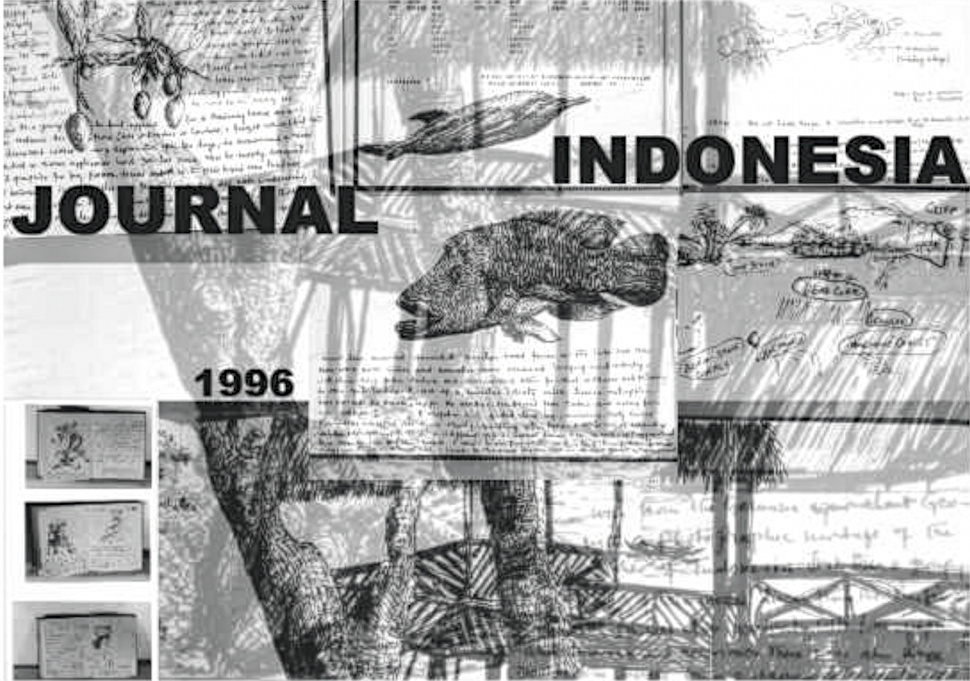
Journal Seychelles, 1995
- 2016
- Digital Collage from the journal
- Journal Dimensions: 16 x 21cm

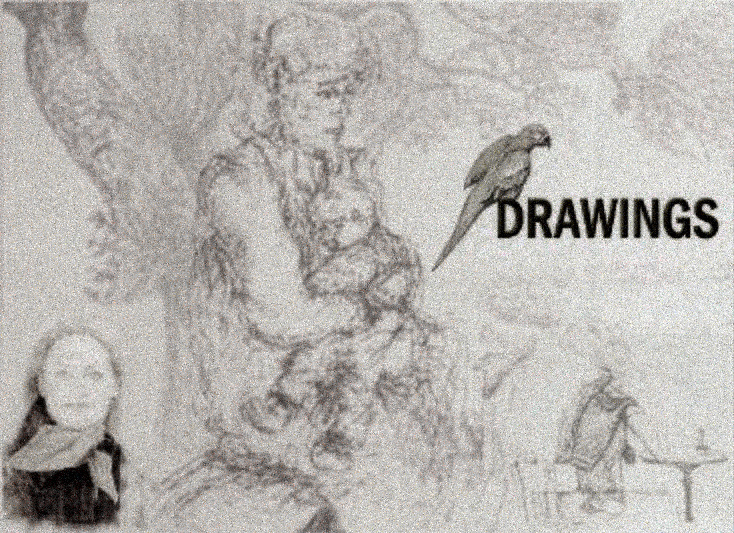 Drawings to me have meant more than just the usual artistic endeavor. For classical Renaissance and baroque European artists, especially after the discovery of oil paintings, the sketch drawings were merely blueprints for the final artwork in oil or tempera, and they would often be literally thrown away after the work was finished. It was only much later that they acquired a value on their own, associated with the artist. Drawings for illustrative purposes and etchings were the exceptions. With artists like Rembrandt, the sketches too became valuable assets for collectors and museums alike.
For me, however, the sketches have a special, more personal value. Quick sketching on the go to me meant a practice in a more focused awareness of an object and less a faithful reproduction of the subject or the honing of my skills, except when not specifically engaged in drawing for drawing's sake. I thought they would keep the memory fresher than a photograph ever could. You have to take in the subject with significantly more awareness than when taking a photograph. And quite often, but not always, it has been the case. Looking at some old drawings, the memory is certainly more nuanced than when looking at a photograph, and sometimes even the memory of the act of sketching can surface into awareness. This increases the potential for significantly more detailed comments and narratives on the subject today than would be possible alone from looking at the photographs that I may have taken on the occasion. In cases where I have done both, made a sketch and also shot a photo of the subject, the sketch helps to expand on the description of the photograph.
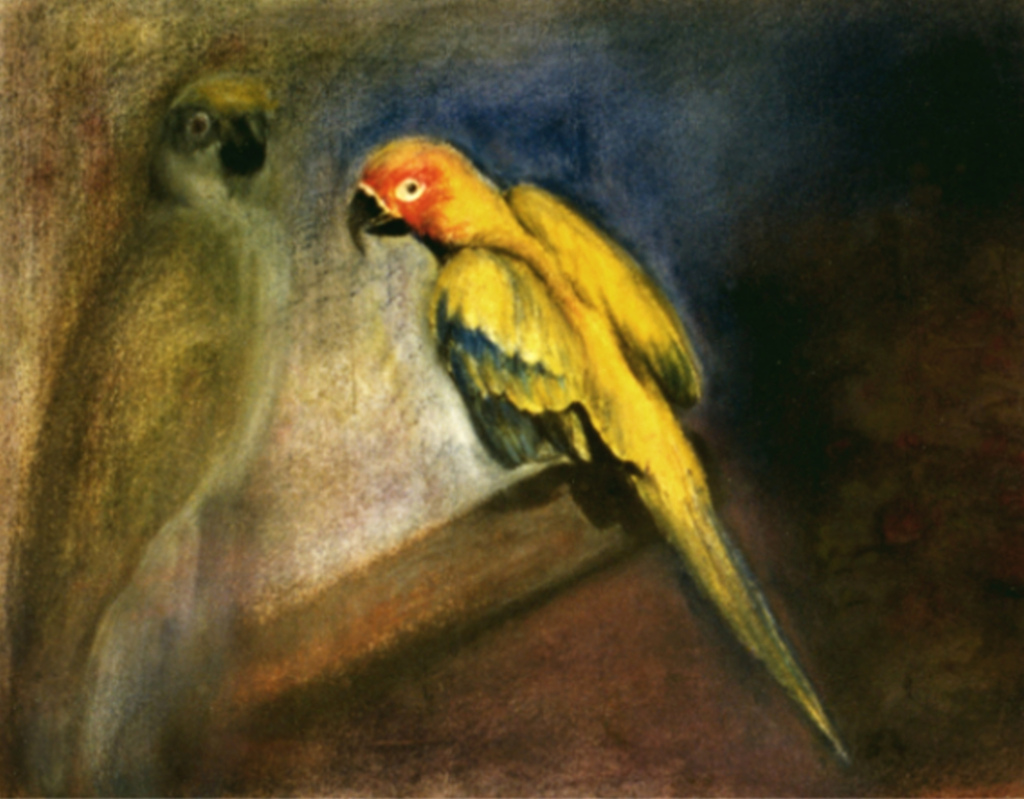
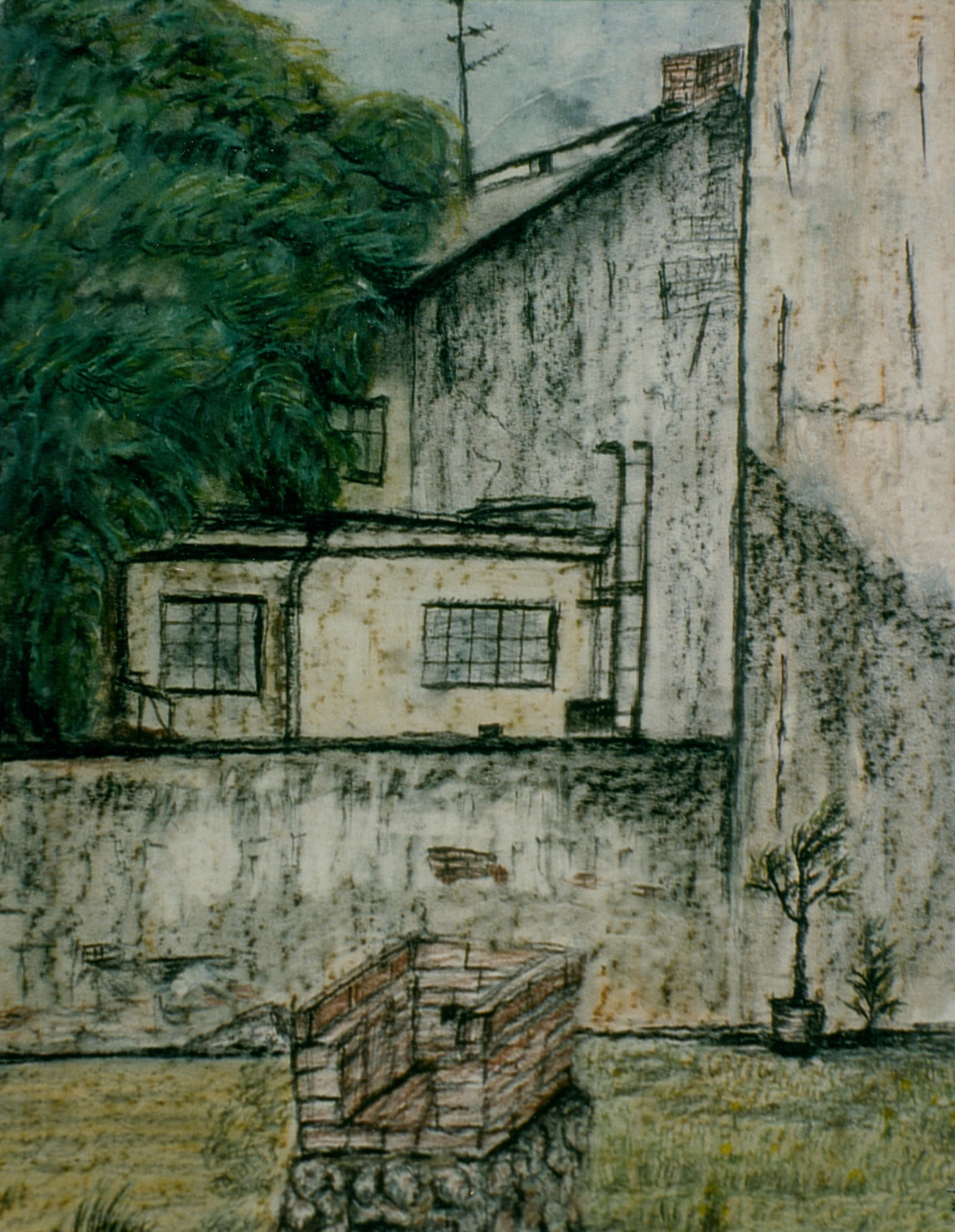
I once had a grey parrot, whom I named Hermes. I must admit that I, as a young man, succumbed to the temptation of owning one, something not very laudable, unless you are a free-roaming pirate John Silver and the parrot is free. I, however, never clipped his wings, despite the advice from my neighbors. We had a chestnut tree and an old ruin (sketch further below on this page) in the backyard. I planted a big branch from the chestnut tree in the yard beside the ruin, where Hermes would sit on the top, and the neighbours would come and speak to him. In the evening, he would freely come into his cage, which was his home and which I never closed. He would preferably sit at the top of the cage.
He always wanted to play with the things that I was using. He would tiptoe on my table, and suddenly snatch away my brush or drawing pen when I was working, and then head back to the top of his cage and nibble triumphantly at his trophy! As I did not want him to gulp ink, I kept a pen without ink for him. If I gave it to him, he would throw it away after a while and instead come and grab the one I was using! I had this uncanny feeling, he wanted what I had! And coming back from work, I would generally head to the other room to greet my girlfriend, working at her desk, but Hermes would invariably start shouting deafeningly loud! I had to go and greet him first, even if only for a moment. Then the shouting would stop. Interspecies jealousy!
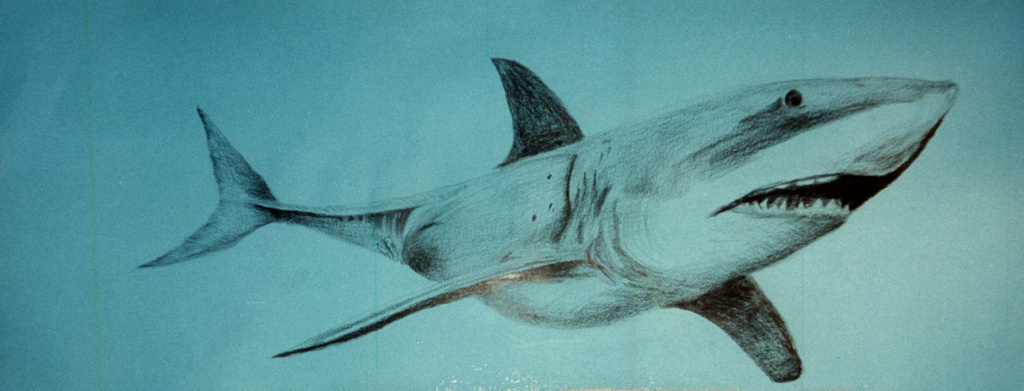
I have never felt completely relaxed when the sharks were visibly too near, as has happened quite a few times, and during the night dives, when they can smell you long before you see them. It has more to do with their eyes, rather than the notorious movie The Sharks, that makes them look slightly unpredictable to me. Once, I intruded unexpectedly on a tiger shark, hiding in a cavern at night. I was face-to-face, literally inches away from her. My spotlight blinded her. It was a great effort to keep calm, and it felt like ages till I regained the altitude where my diving companions were. I had forgotten to check the time and depth, fascinated by the radiant marine fauna around these caverns, and while exploring had strayed a few feet deeper than the limit set for the dive and away from my companions. Luckily, she did not get scared and attack me in defense or confuse me with prey. Many sharks have a night vision amplifier known as Tapetum Lucidum, which reflects light from behind the retina back into the retina for better data analysis. I also refused an invitation from a friend once to dive in the Maldives. Her father was famous for leading tours that fed sharks. The idea of feeding sharks did not appeal to me at all. Despite having no bad experiences, I still feel quite alert in their presence. Quite imposing creatures, even when some Orcas flip them around just for fun! Sharks, however, are a minority in ocean life but do get a lot of attention, from people and the media, next only to the sea mammals.
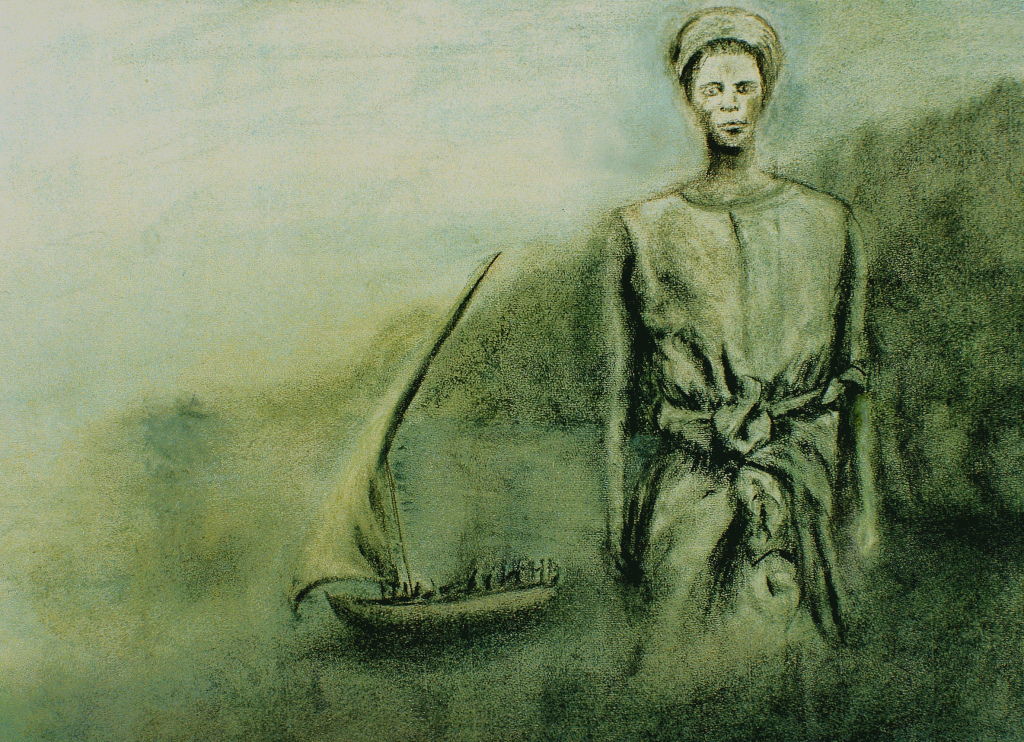
Trudging along the hills of Itete, with Boas my companion, guide, translator, Kinyakyusa teacher, and finally a friend, we met some ladies walking along the way. They adamantly insisted that they carry my backpack! A cultural courtesy! I took their photographs. The drawing was later made from one of the photos. This tall young woman's father was employed in Zanzibar, which she enjoyed visiting, so the ship and the sea, I thought, would be an appropriate background for her portrait.
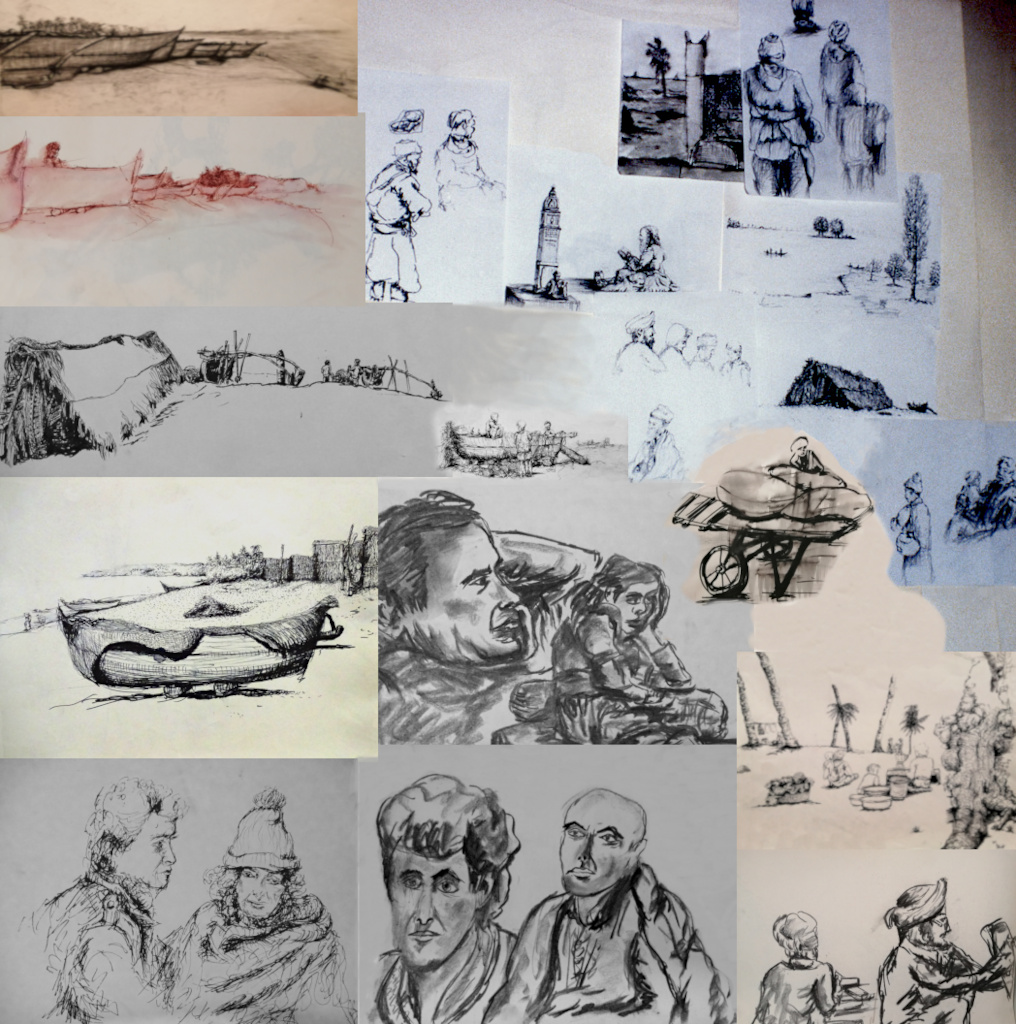
Sketches made during occasional visits to a few places of this huge sub-continent. The ones here depicted are from the almost ancient, now poor, chaotic yet at places picturesque and with a story-book history, old Delhi, from the disputed region with heavy military presence, and in intrareligious conflict-drenched Kashmir, and from the pleasantly peaceful Goa.
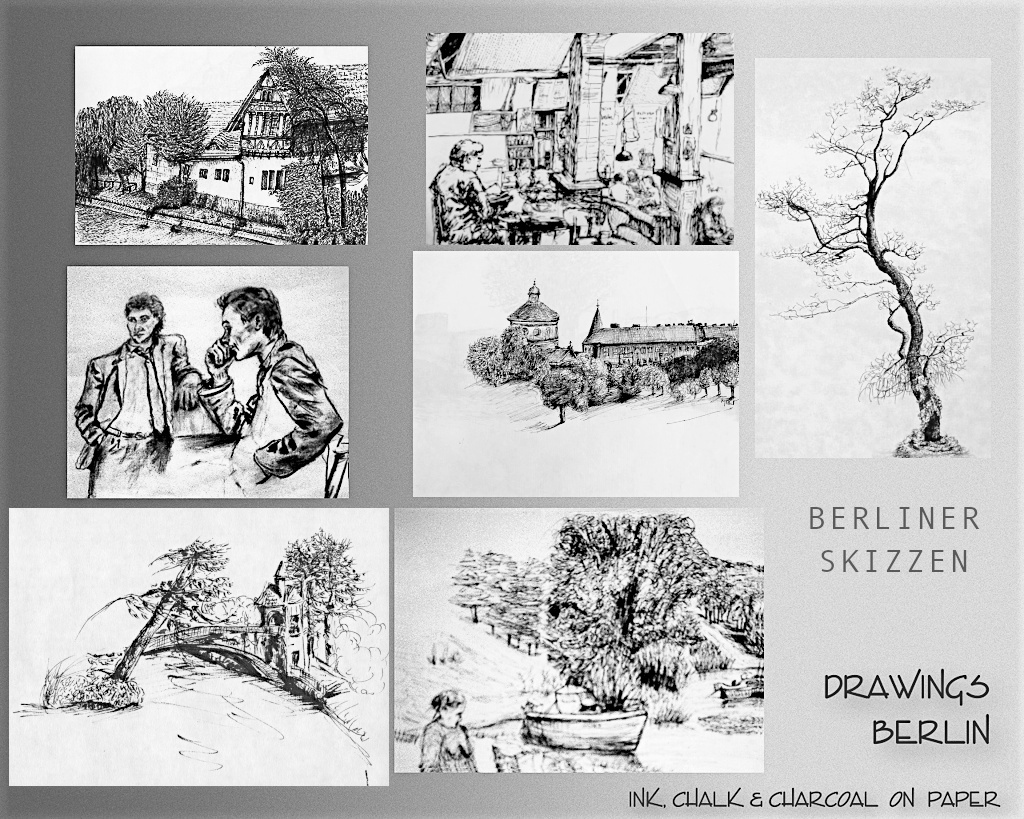
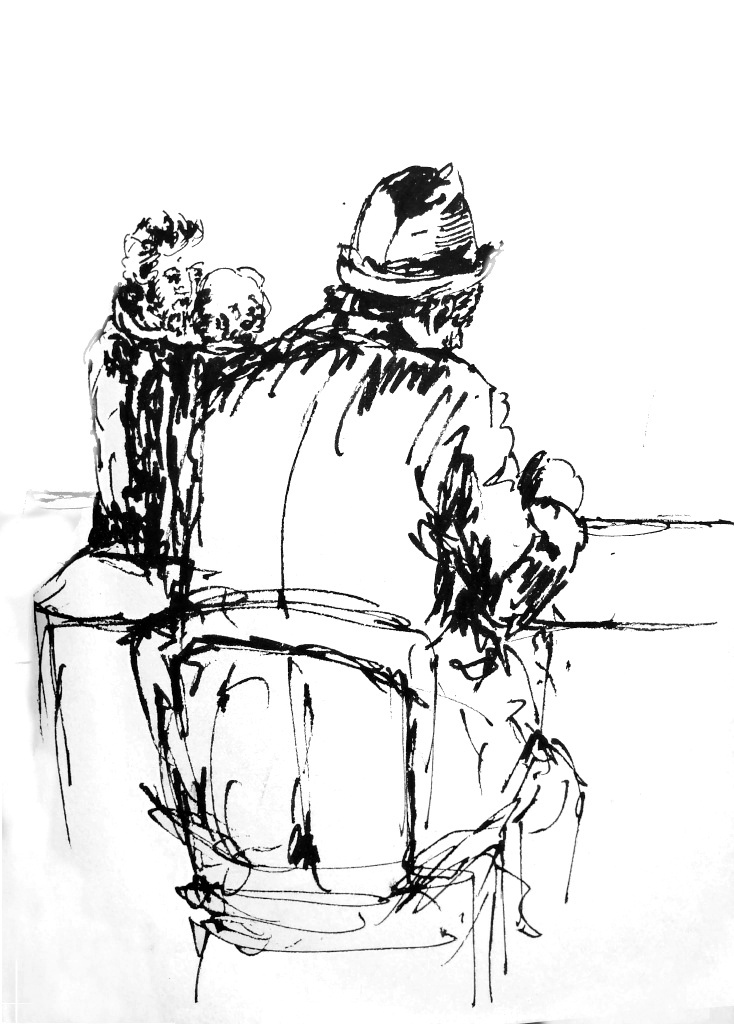
Having visited and lived in quite a few metropoles, Berlin stands out in the sheer amount of geographical, topological, though almost uniformly flat, architectural, cultural, and historical diversity, which the more recent history has only enhanced. The communist bloc managed to save many of its bio-treasures from urban cement and autobahn intrusions. It still had pristine, sparsely populated lakes and forests, and fauna. You could walk for days through Mecklenburgische Seenplatte _ wonder of ice ages_ and visit half a dozen or more pristine lakes without meeting a soul! No private yachts and steam boats or noisy urban sprawl. The same goes for the one-time East Berlin; its lakes were still unmolded from urban onslaught. However, most of the lakes and forests in the West are admittedly quite well maintained, though. You could bike through equally sparsely populated and undeveloped and well maintained forests, and its fresh water lakes are wonderful both in quantity and quality, which is unique among the metropoles of the world. And it also has huge lakes, like the Wannsee, the favorite lake of Albert Einstein, where he would sail for relaxation. And Berlin has no dearth of Kneipen(bars) where I would often sketch people during the early eighties.
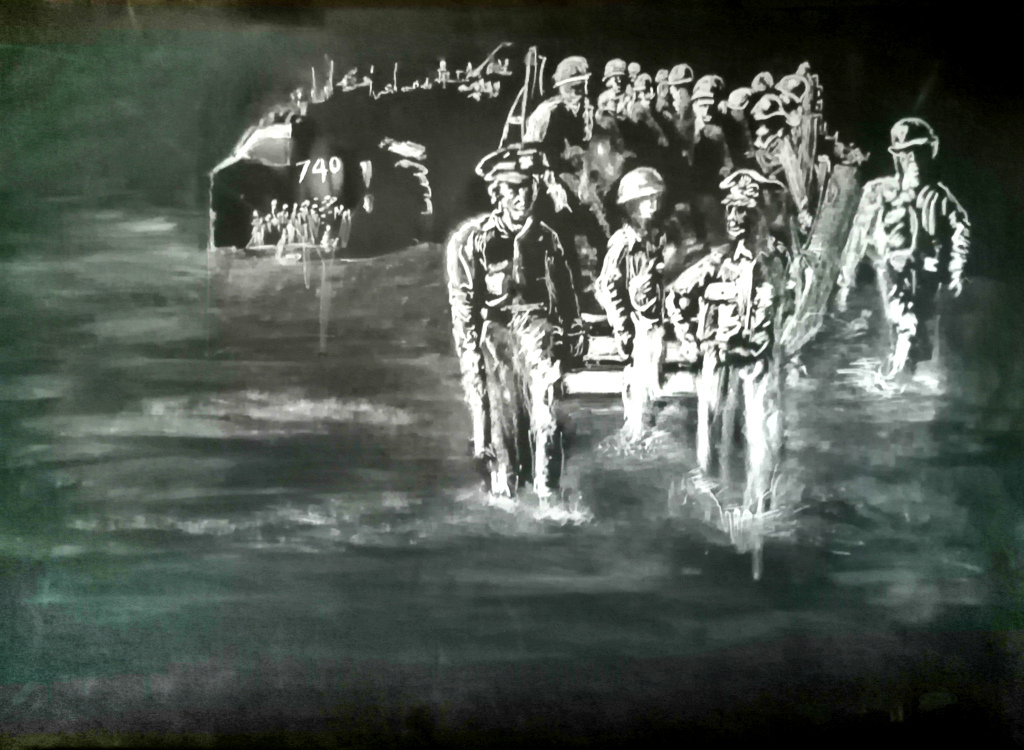
After:
Carl Mydans
Reproduced in: Life Spring Special, 1995.
Originally printed in: Life magazine. Nov. 1944.
There might be another version of it, by the General's own photographer, Gaetano Fallace.
Well, the medium is the message, and some will go to great lengths to exploit this fact.
The return was, of course, after the massacre.
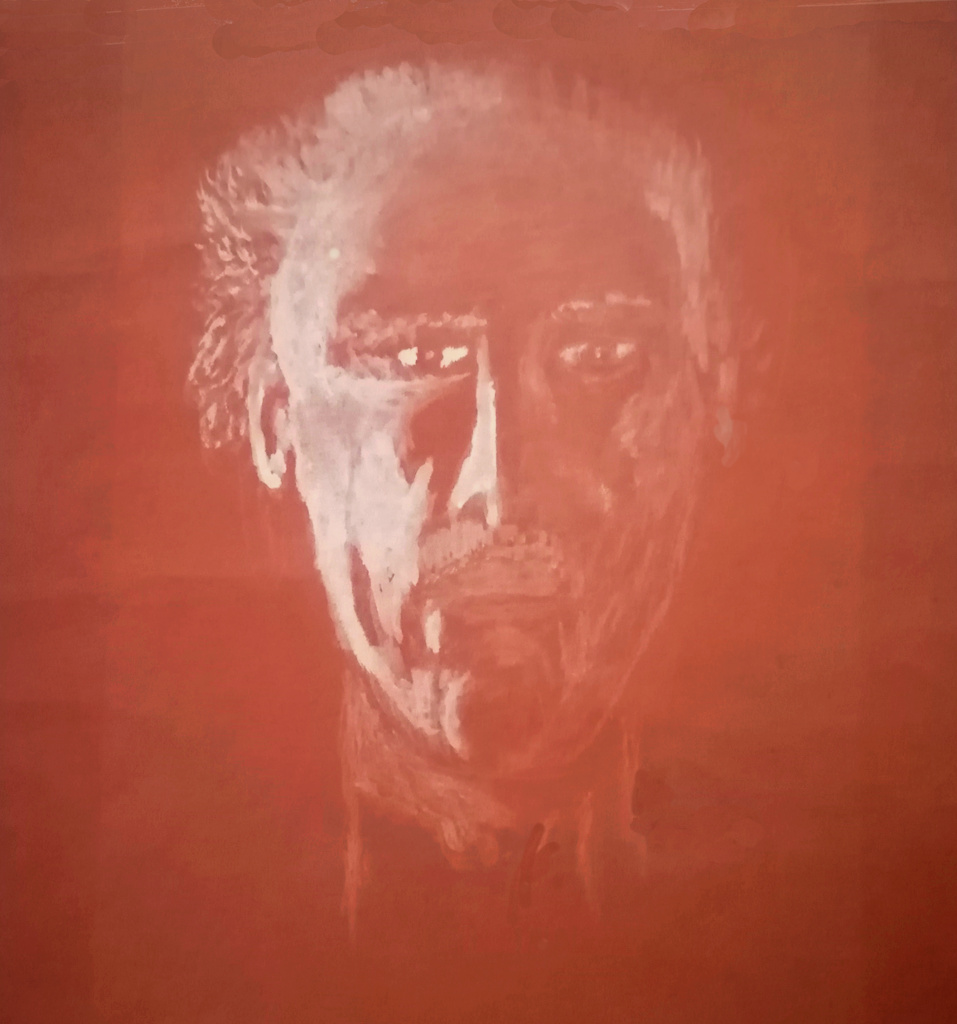
After I saw the photo, my first thought was that it would be a good motive for what I was occasionally experimenting with at the time. Using as little as possible pigment strokes with bright chalk for highlighting a surface on dark-toned paper or carton, and letting the human brain do the rest of the work. Of course, it came naturally after having worked for a few years with pastel drawings. Degas and probably also Watteau would often use watercolors for extra highlighting. But on a dark surface, you can achieve the same without using anything else. My intention for the drawing was less political and more technical, to put it in short.
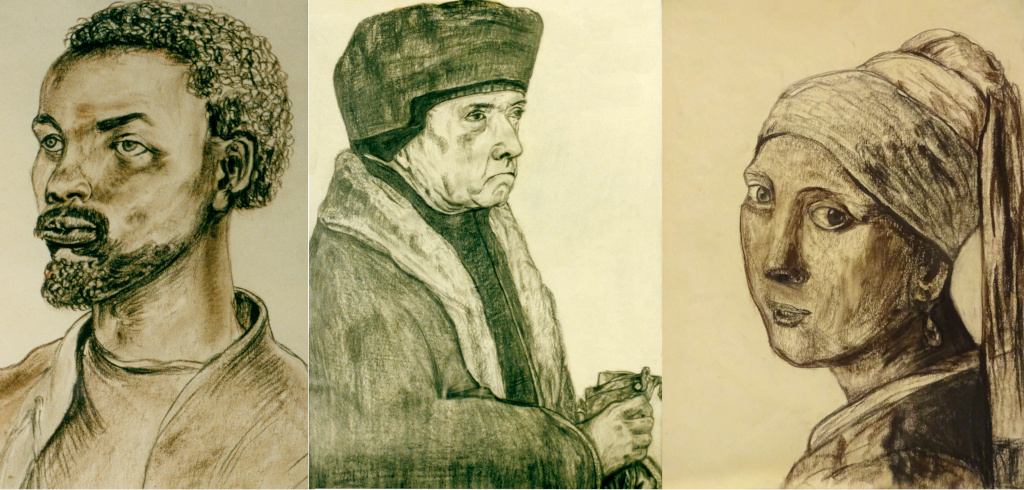
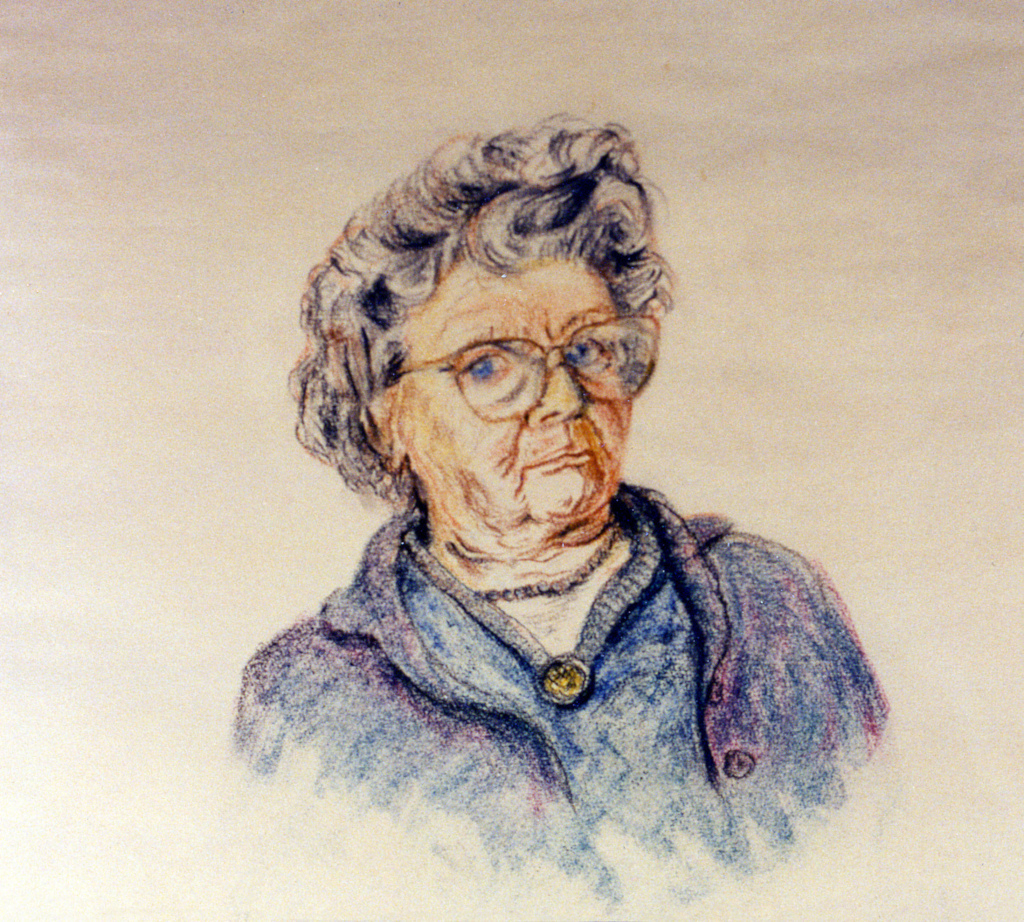
Grandmother of my girlfriend from Hessen, Germany. Later, I got married in Las Vegas (1987) and took the extra name Nafziger that was attached to my original name, Bhat, with a hyphen. Many of the Nafziger clans are Mormons. This, however, made my name even longer (Mushtaq Ahmed Bhat-Nafziger), but I kept it for years, even after the divorce in 2004, right up till 2020, when I finally changed my name completely, keeping just my original last name, Bhat. I dropped the Arabic and Persian names that hardly anyone in the social space that I inhabited spoke correctly, and that had too many religious connotations for my taste, and being an all-time fan of Greece, I took a Greek name. And it was short; 9 chars instead of 25!
I would often spend the national holidays at my parents-in-law's in Hessen and regularly visit Oma Nafziger, where I made this portrait of hers. It was a substitute family or extended family circle, in the true sense of the word, and where I felt at home. The favors incurred, and the treatment received will keep me indebted for the rest of my life, and the memories will remain one of the most cherished in my quite nomadic and multifarious life.

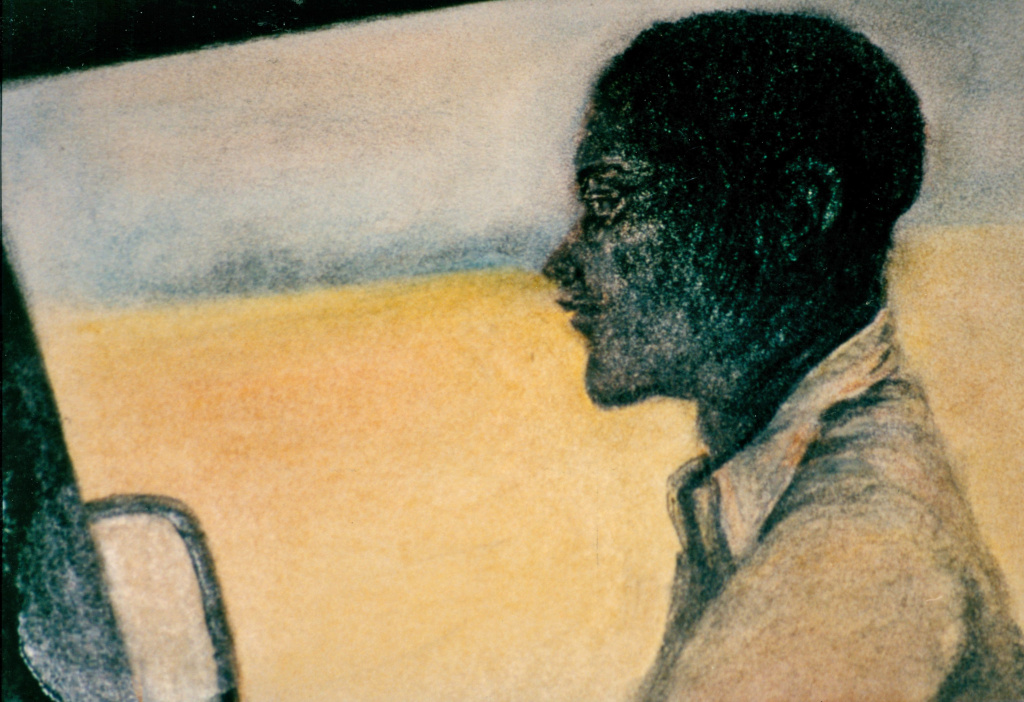
Daniel Robinson, a young Nykyusa, was doing all sorts of errands for the Lutheran hospital in Itete. I had driven on this day from Itete to Mbeya with Per Gustaffson, a Swedish Engineer, responsible for installing electric power plants in the region, to photocopy a precious, academically almost unknown little manuscript, which, to my surprise, the doctor, Carsten Mantel, working at the mission, possessed. There was no mention of the author, probably an English missionary from the 19th century. A treatise on Kinyakyusa Grammar, which I was explicitly told by, amongst many others, by a professor at Dar-Es-Salam, did not exist. He lent me one of the two copies he had so that I could make a photocopy. Robinson was at the Mbeya mission center that evening, and on his way to Itete. He brought me to Tukuyu, where I was staying the night. I took a photograph of him on the way, and the drawing, which I made on one of the few pages still blank in my journal, is based on that photo. It is, however, a two-year-later entry, which should explain the discrepancy in the dates. Daniel was a forward-looking guy who felt at home both in the Nykyusa highlands and in the new Tanzanian urban centers, speaking fluent Swahili and willing to learn foreign languages.
The Lutheran mission was one of the busiest I have known in the course of my travels. Most of the day's chores, as well as the administrative duties, were managed by Vera from Berlin, with the help of a few assistants. The doctors and professional nurses, commuting between the various hospitals in the region, would be there for about two days a week. Vera would often be woken up at night by the staff in case of problems that they could not handle. She was like the matron for the community. Students from Kiel University, Germany, had built the solar panels for her dispensary, pharmacy, hospital, and her home all in one facility. It served most of the region around Itete. There was no other place to go for the villagers. It was one of their worst times. Increasing AIDS infections. Often, you saw young men, women, boys, and girls being brought from the neighboring villages to the hospital early in the morning. In the afternoons, they would start invariably spitting left and right, and then a few hours later, they would be dead. The frequency was getting even higher. Tanja, a young volunteer from Bavaria, would drive the corpses back to the village in a 4-wheel drive, over dirt roads and tracks, often getting stuck in mud after rain. I accompanied her a few times. The villagers seemed to take it with a stoic inevitability over time. The work of these great people deserves many dedicated chapters, which I have noted down in my journal but have not published as yet.
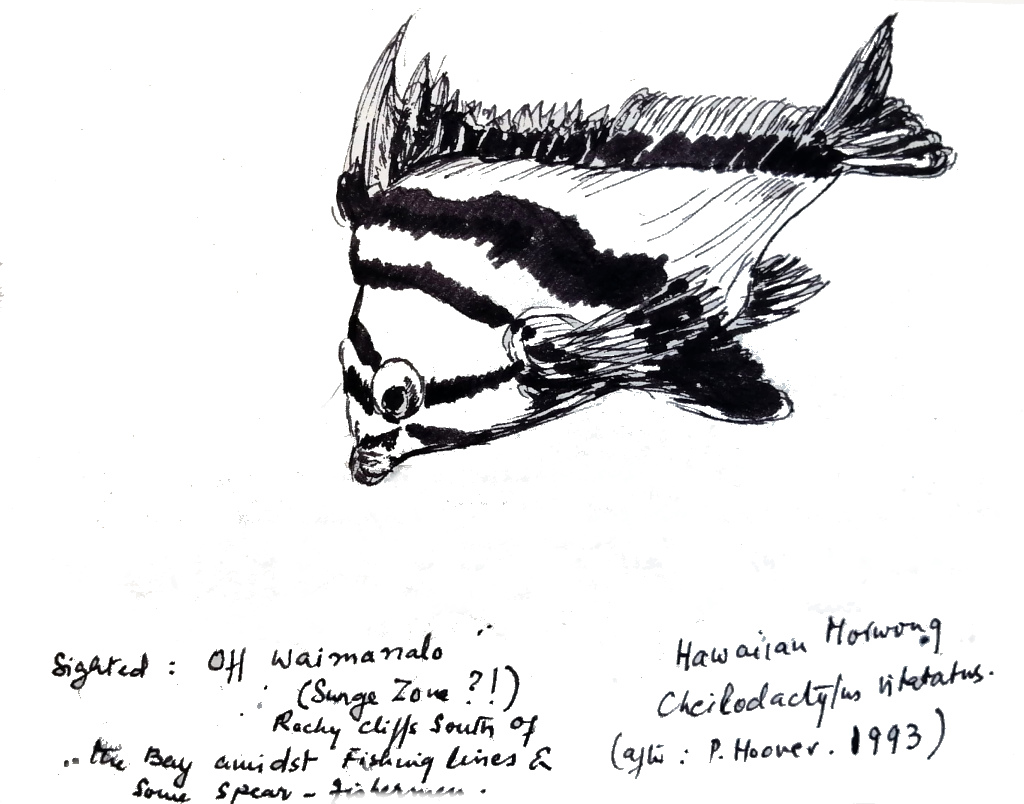
Sighted on a dive at Waimanalo, Oahu.
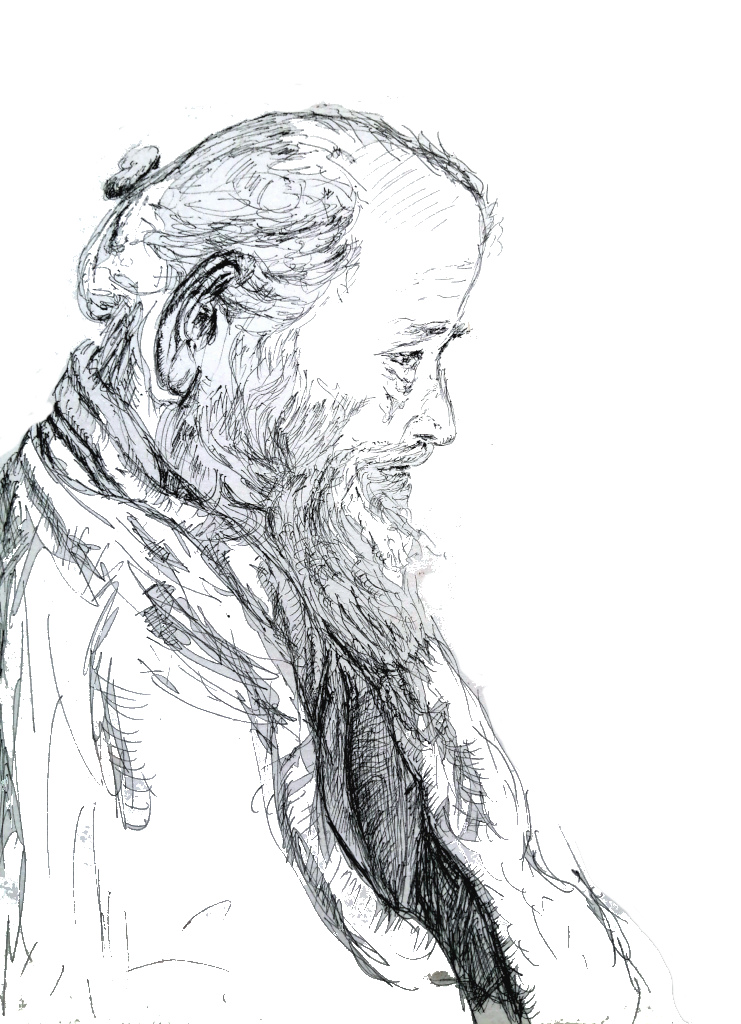
After having finished the social responsibilities of raising a family, some men in India, including the very rich, may renounce family bonds and material possessions and wander through the land without any possessions, except their attire and a bowl for alms, often respectfully given. They are commonly referred to as Sadhus, the holy men. They may also do palm reading, offer massage or yoga lessons, and some may even earn money by doing extraordinary things, like standing on one leg for weeks. There exists a wide variety of Sadhus. Some wiry old ones on Himalayan peaks, meditating, thinly attired, and taking cold water baths at a ripe old age. Some smoke ganja and laugh a lot and are generally infectiously cheerful. But most of the true moksha seekers visit the holy places on month-long marches on foot. And almost all of them may one time or another, visit the religious gatherings, like the Kumbh Mela, a mass gathering without a parallel on the planet, where the sadhus may number in thousands and the general pilgrims in millions.
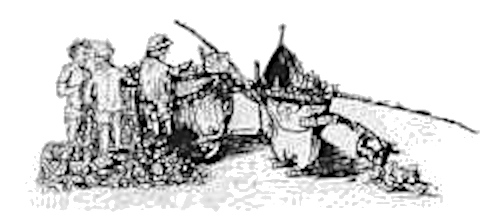
The humble fishermen of Goa. They go out at night, sometimes in quite a rough sea, to cast their traditional nets, which have hardly changed through the centuries. A tough, rough life, but strangely, they display a more contented demeanor than many of their urban brethren in the land. They still had significant catches at the time, but it is only a matter of time before their resources get more constrained, if they have not during this time. But most of their children go to Christian Missionary schools, where they will probably become more skilled for diverse future professions. Goa has a large catholic indo-portugiese population, who appear and admit to being quite satisfied with their local government. However, they did go once in protest march to the airport and threw tomatoes at the incoming tourists. In the sixties, Goa served as a kind of mecca for the hippies. The Who allegedly sold their equipment cheaply or gave it away for free to a local band. However, later, there was the real estate invasion, from people eyeing the potential richer Western tourist class. Clubmeds and posh resorts, swimming pools, and they just siphoned off the scarce fresh water available here. No wonder these otherwise contented people got enraged!
I had some good friends from Goa when I was living and studying in Bombay. They were almost all musicians, and they taught me how to play guitar. Quite talented guys, there was one especially, Remo, who studied at the same place as Freddy Quinn, who would play anything I asked for, and he knew the songs of most of the famous singer-songwriters by heart. From Dylan to Crosby, Still Young, and he was a dedicated fan of the phenomenally multi-talented English minstrel Ian Anderson and would call him God. Well, guess what? Decades later, I read on his website that Jethro Tull, or just Ian Anderson, really played with him some of his compositions in Dubai! It is a small world.
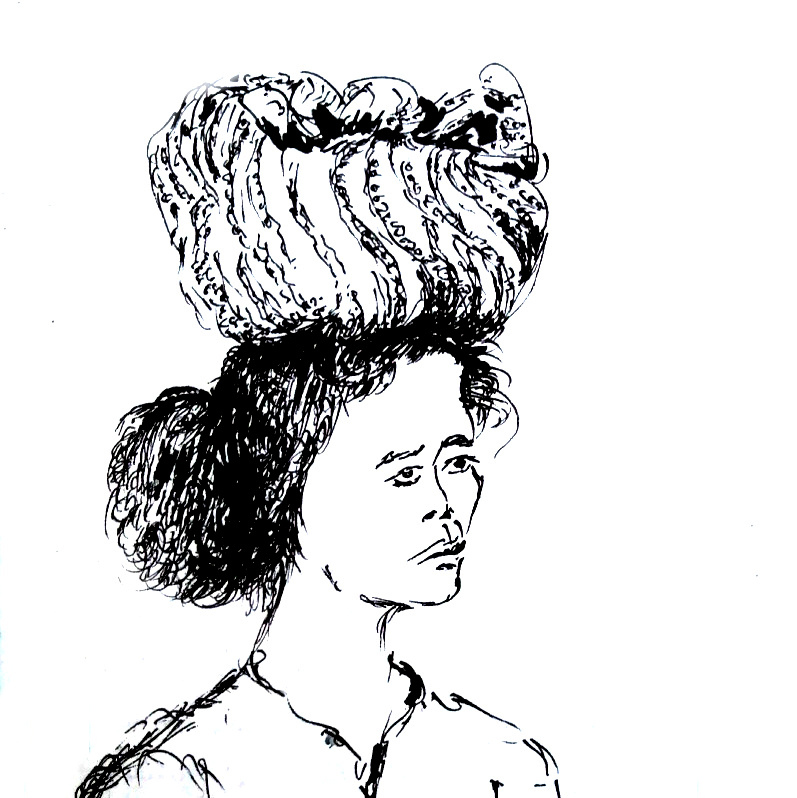
A still frequent scene in Asia, Africa, and the Pacific and Indian Ocean islands. Women, in some places, also men, carrying baskets of agricultural produce or eggs, fish or just vessels of water on their heads, with ease and often with grace, over long distances and sometimes over rough and hilly terrains. Some Asian women have a penchant for colorful textiles and long flowing dresses that can look quite wonderful when they glide past you over a hilltop with the wind blowing and the setting sun casting long shadows over the hill.
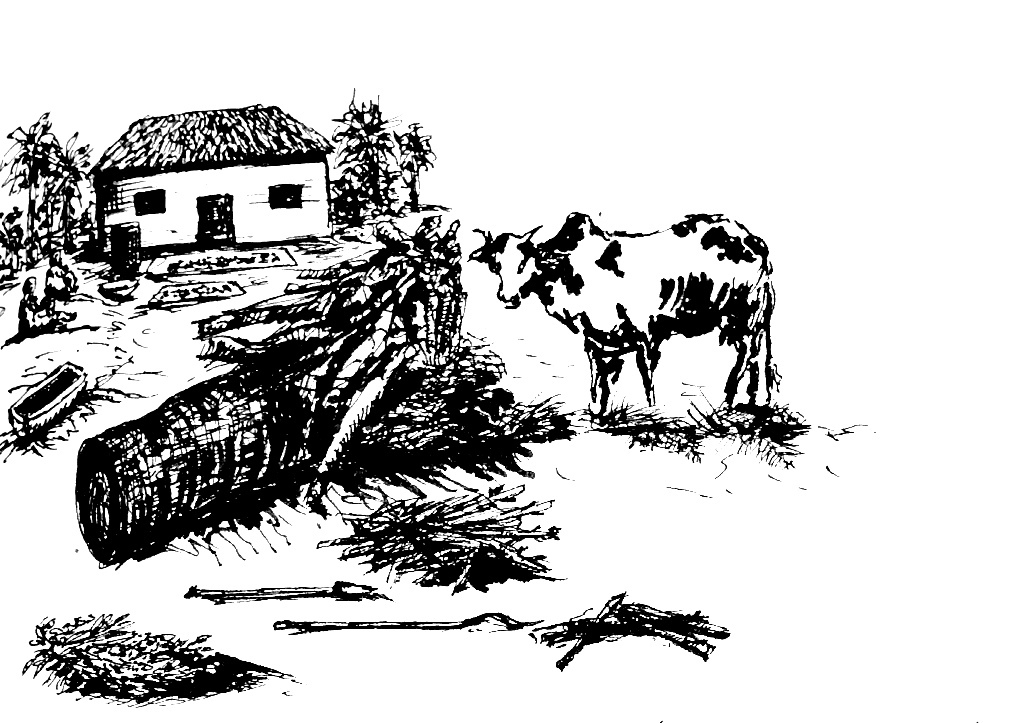
One of the first striking impressions I had, as I visited one village after another during a social anthropological field trip through the highlands of South Tanzania in 1988, was the perception of time's flow. Although I had made myself a relatively strict time plan and was fully embedded in the post-industrial urban Time-Perception macrocosm, a German one at that, I would perceptibly notice the relieving effect the villages had on me. Often, the hypertrophied cortical urges that a capitalistic way of life to “progress”, elbow ahead, move forward, not-waste-time, achieve a goal, would fade into the background, and all that mattered was here and now. These people still had a precious good, one could dream of, that had not been turned into a commodity.
Everything was done leisurely and without haste. There were, of course, differences, where the crops were planted for local need and where they were planted for the government. The latter did have immense problems of its own. The communist government of Nyere was utterly incapable of marketing their valuable products, like Coffee arabica, at the world market. Much of it was rotting in warehouses in Dar-es-Salam and seaports, with the result that the peasants would stand in long queues to get money for their products. Only to be sent back empty-handed. I was surprised to read about it and wondered why China was not buying it. But generally, the villages with semi self-sustenance produce seemed to appear more contented and even relatively prosperous, and here the time meandered at a steady speed. Leisure and work seemed somehow intertwined; in fact, there seemed to be hardly any distinction. It almost appeared as if time had stood still here.
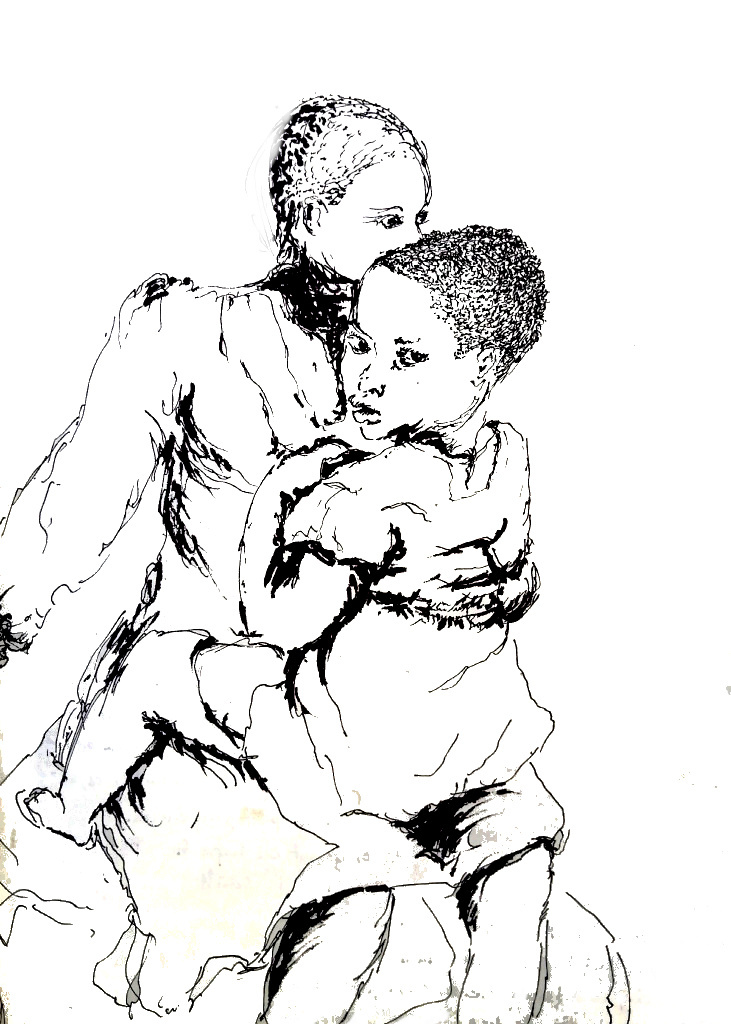
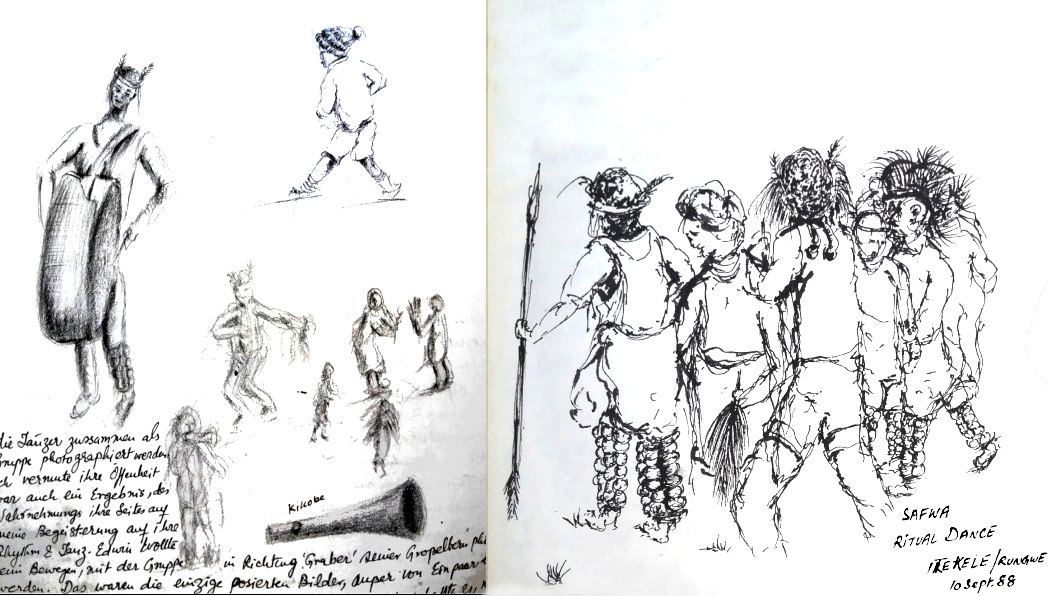
Walking through a forest in Rungwe, Busokelo, Tanzania, in a sparsely populated region, I saw smoke coming from a banana grove in the forest clearing. As we approached nearer, I heard drumming of an unfamiliar kind. I told Boas, my companion, let us go and see it. But he did not want it and tried to dissuade me. I asked why, and he reluctantly said that it was a secret ceremonial ritual dance and he would not go and intrude. So it seemed that he knew about it. He must have got wind of it from a neighbouring village, perhaps while drinking Pombe with the locals. The Nyakyusa are Christians who have renounced their old traditions. However, in secret, some still keep their old faith alive. A well-to-do man from the region had his parents buried in the standard Christian way with tombstones on their graves some time back. However now, he was digging them out and performing a traditional ceremonial ritual dance before reburying them. And it was done secretly, without the knowledge of the public at large, the officials, and the clergy. The Safwa, a neighbouring tribe that has retained this tradition and who are more or less professional dancers and musicians, had been hired for the occasion.
I was fascinated and wanted to visit, but Boas refused, but I headed on, and he, to his credit, followed. As I came upon this reenactment of what appeared to me as an almost prehistoric, mythical, semi-animistic ritual, I was more or less transfixed, almost hypnotically, and so it seemed instantly transported to another temporal dimension. It was an experience of a lifetime, but this is hardly the place to talk about, however, it is documented in detail in my journal. I saw surprised looks and some tangible tension, but I happily joined the dancers! And the tension was broken, and sure to my surprise, as I sat down for rest, I was offered food!
I had a Sony pocket cassette recorder with me and tried to record the event, but discovered later back at home that the tape was damaged, and the recordings were far from optimal. There was unfortunately not much worth restoring as the recording was really bad, probably because the battery was already exhausted. However, I did manage to take some photographs that they did not object to, and importantly, they did not pay any attention to it, immersed as they were in a semi-transcendent time dimension during the ceremony. Yes, undeniably one of the most memorable experiences of mine, an original ritual funeral ceremonial dance. With what instruments, attires, polyrhythms, vibes, and all original for its own sake, not for show and not for the crowd! A live display of authentic belief and its enactment in a trance-like dance.
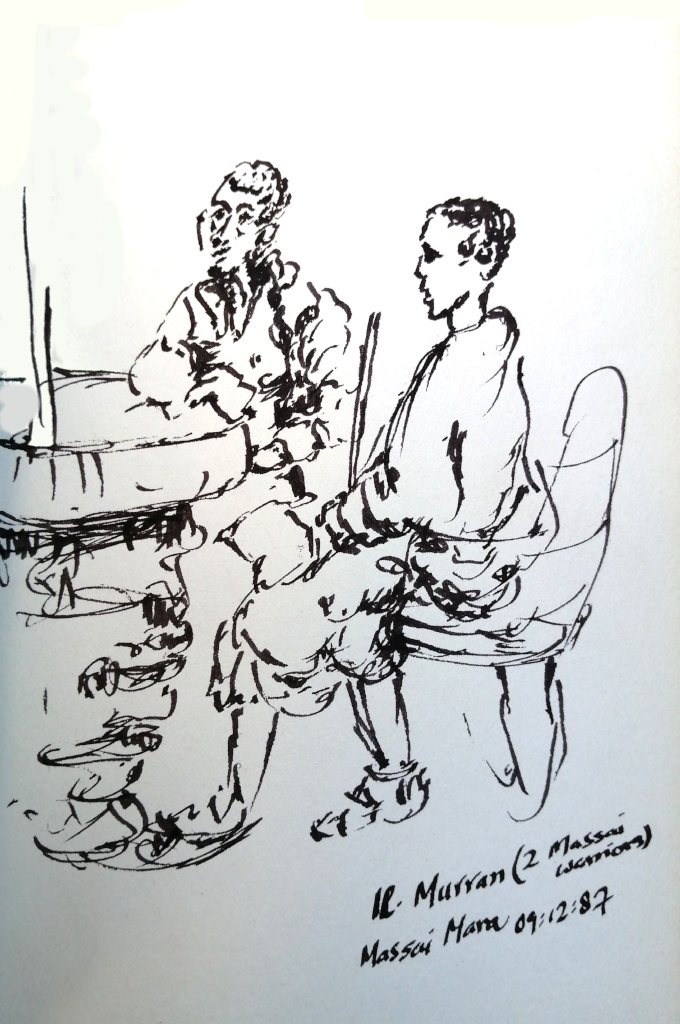
You could not help but notice the display of pride by the Masai in their attire. Except for the long blue coats they had taken a fancy to, they still wore their traditional dress, in public and in the cities and offices, apparently a matter of concern for the government, which viewed them as backward people and was planning to pass laws against it. However in the parliament, a representative of the Maasai was against the legislation, famously saying: “If Almighty God could stomach to view the entire anatomies of Adam & Eve in their complete nudity, is not a little bit prudish for an African government to have fits merely by viewing a casually exhibited Maasai buttock?”
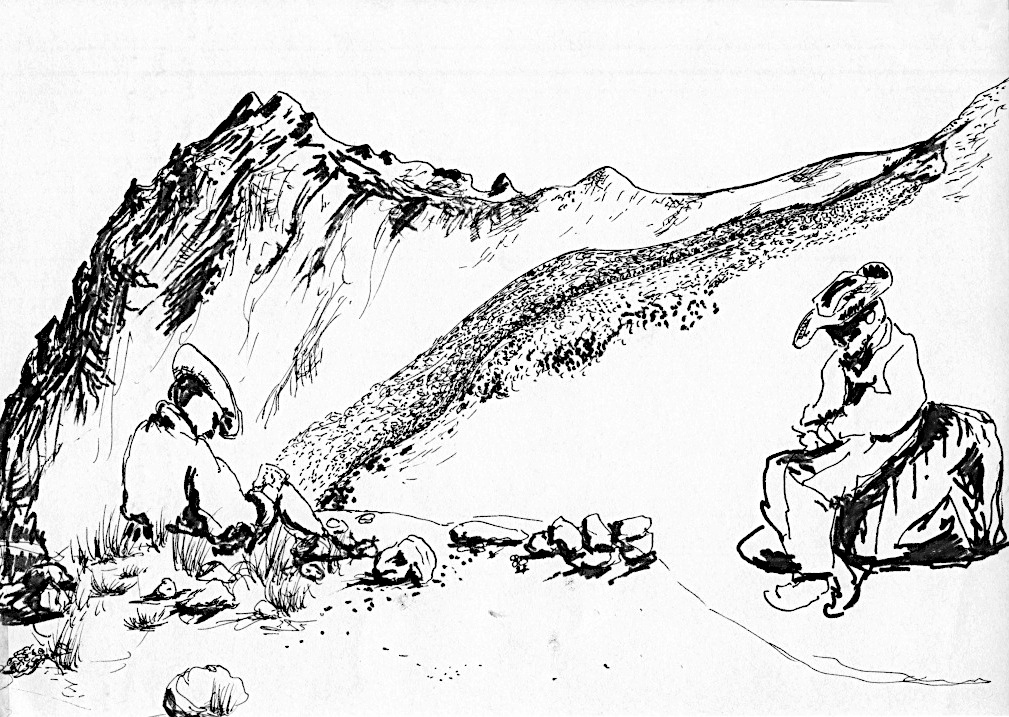
I got acquainted with Olivier from Reims, France, at the Teotihuacan, and we both took the bus back to Mexico City, but along the way, Olivier said we could get off at a certain bus stop and from there walk to the famous crater, Nevada de Taluca, and return to the road for the next bus to Mexico City. He seemed to be sure, and I assumed he had checked the maps. It was still the analogue epoch! So I agreed. Well, we kept on walking through the National Park, and on reaching each summit of a vale, we expected to see the crater. This went on and on. It started raining, and there was no crater to be seen. It got pitch dark, too. Finally, we spotted a rest house with lights on, and there was indeed a person there, who, however, did not understand English or French. Anyway, we could luckily dry ourselves, have food and hot drinks, and spend the night at the place. The next morning, we followed the directions to the volcano that the man tried to give us and that we only half understood. There were hardly any people around, and seeing a military truck on the way later, we asked the personnel about the volcano. They laughed! It was far off, but they would gladly take us there. And that is what they did. But not only that, they took us back to Mexico City, after we had walked around the volcano and taken the photographs. Such hospitality from the Mexican Military is indeed one of the nicest surprises that I have witnessed during my travels.
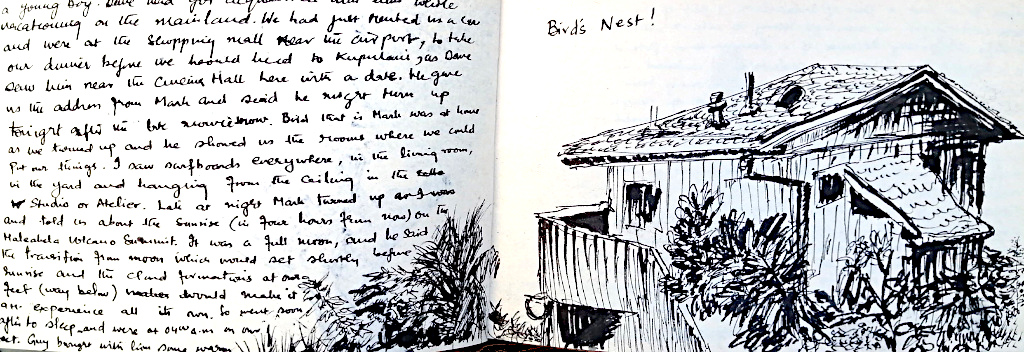
My friend Dave Martin and I traveled around some of the Hawaiian islands in 1990. After living some time in Maui with Dave’s friends, Mark and Guy, his neighbor, I have always played with the idea of retiring here. These guys had left California and were living a life here without using much fiat currency, had almost no insurances and had embraced the wonderful natural habitats they were here blessed with. They had also exchanged sharing against rat-race competition. I called Guy a Trapper, he had the instincts, spirit, and know-how of an old school pioneer or even a Mohican! I have written a lot about that in my journal. If Maui were not so far away, for my dear ones to visit, and the USA politics had not changed so drastically, it would have been perhaps my first option for retirement. Surfing, camping in the wild, diving, and music playing and partying, night walks, and stargazing were all year-round activities. By the way, the observatory is a foot walk away from Mark's house. And most importantly, the guys were easy-going. I hardly saw any tense moments throughout my stay. Genuine laughter was not a scarce good. However, they were all multi-skilled people, which made living like this possible. In fact, Guy and a pilot friend of his were even planning to construct a small propeller machine in their sheds. There were plans hung all around the walls. Mark had a T-Shirt printing machine, where Dave and I printed a few colorful motives, the last one of which I only recently disposed of.
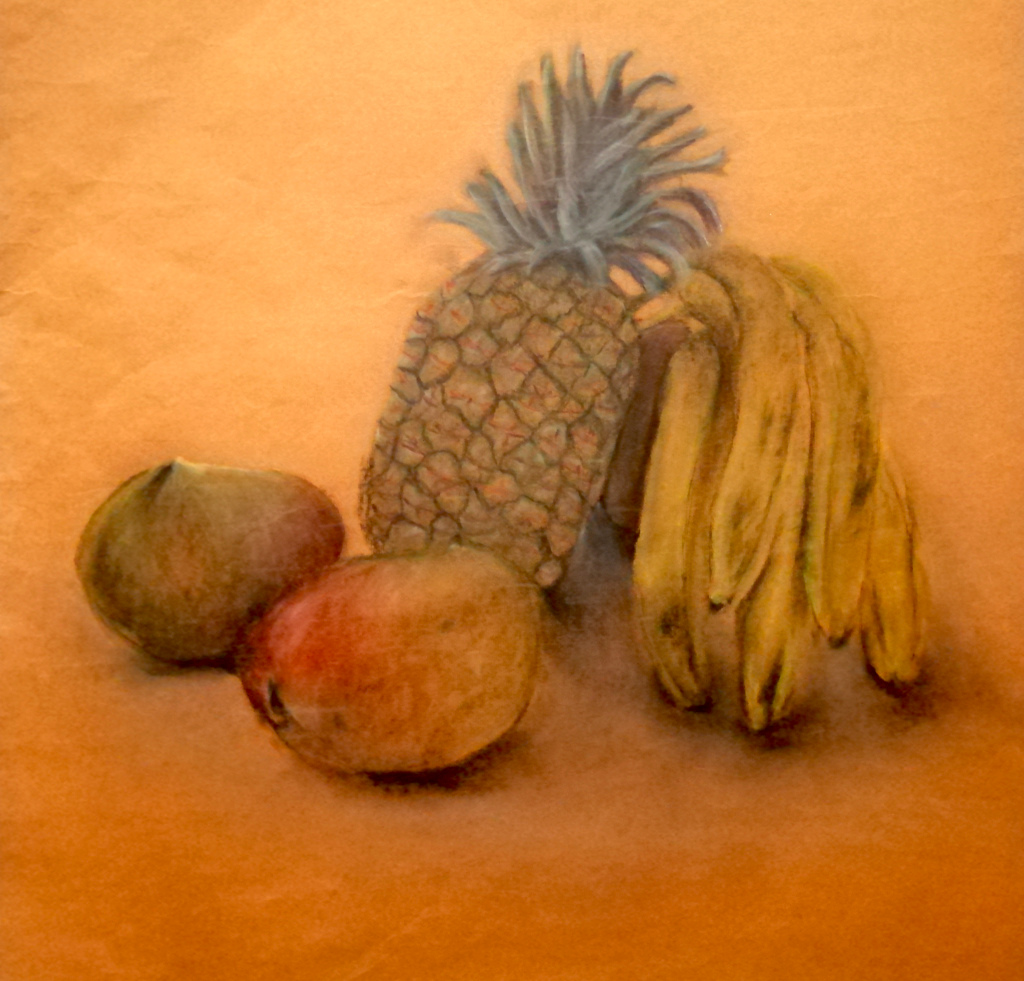
Mark, cosily called Bird by his friends, had a long wall-to-wall kitchen counter. It was studded with fresh, delicious Hawaiian fruits that seemed to appear from nowhere magically. Each morning, you asked Mark, "Bird, what are we gonna do today?" He would invariably look out of the window, witness the sunshine, and say out loud, we go surfing. They would all go surfing, while I would go free diving or snorkeling. Guy even managed to get me scuba dives for free; had to pay only for the equipment rent on the boat, the manager being a friend of his. The Hawaiian marine fauna is a treat for the eyes and the soul, and the weather was just what I would wish for. In all, it was just a wonderful time, in a wonderful place with truly wonderful guys.
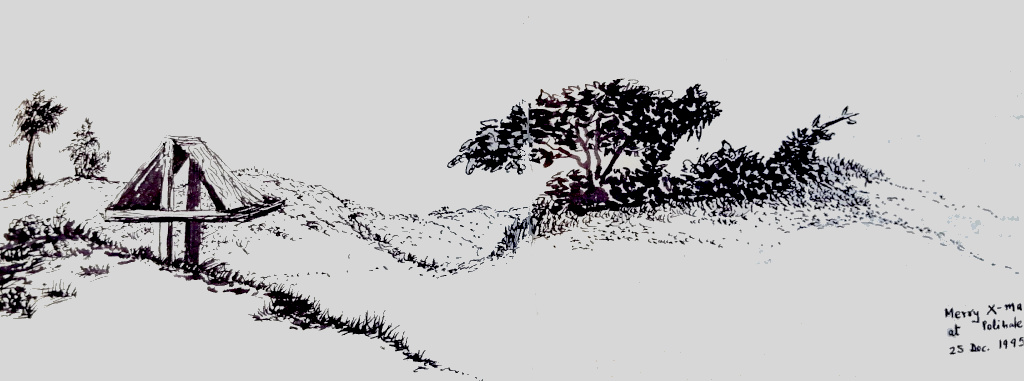
Kaua'i. Dave and I literally had most of the island coastline for ourselves at this time of the year. We drove around the whole island, and only very rarely did we see another person. And this national park at Polihale, where we arrived through a dirt road, had this endless, pristine white sand beach without people or boats or ships. 17 miles in fact. It and the Barking Sands nearby have some massive dunes, and with high mountain cliffs in close range, you feel yourself really exposed to the elements. The whole region appeared unpopulated, though further south, there is the Pacific Missile Range Facility; the next town, Kekaha, however, is miles away. Out here on Christmas Eve, bereft of any other soul, the sense of isolation was only intensified by the vast stretches of unspoiled sand beaches. The place is quite beautiful. A boon for a fertile imagination, to fantasize fictional events and creatures or mentally reconstruct how the earliest Fijians must have felt after landing on this bountiful and multifaceted island from so far off! What a classical feat of human endeavour!
The day before, on the north of the island, at Princeville, I was scanning the notices on the wall of the restaurant, where we had dinner, while waiting for Dave. To my utter surprise, there was a standard unassuming A4 paper clip pinned on the board, announcing that Crosby, Still and Nash would be playing at the Princeville Resort on 26 Dec. There would be a buffet, and partying with the artist. And it cost only $35. It was meant for opening up a school, after the big storm that had recently ravaged the island. What an opportunity to meet personally my favorite artists. All three of them! I had most of their albums, with Neil Young, but also their solo albums, which I enjoyed listening to. It would have been just fantastic, a kind of private, non-commercial, and festive atmosphere to get to know them. But unfortunately, Dave’s Mom, Sylvie at Oahu, was cooking for us on the 25th. And we had a flight booked. Dave kind of knew what this meant for me and consented to stay put till the 27th. But the idea of letting Sylvie down, and she was alone that Christmas, did not suit me well. I knew where my priorities lay, and I never regretted it. Come to think of it, their song "Our House" does celebrate family intimacy incidentally! Unfortunate though.
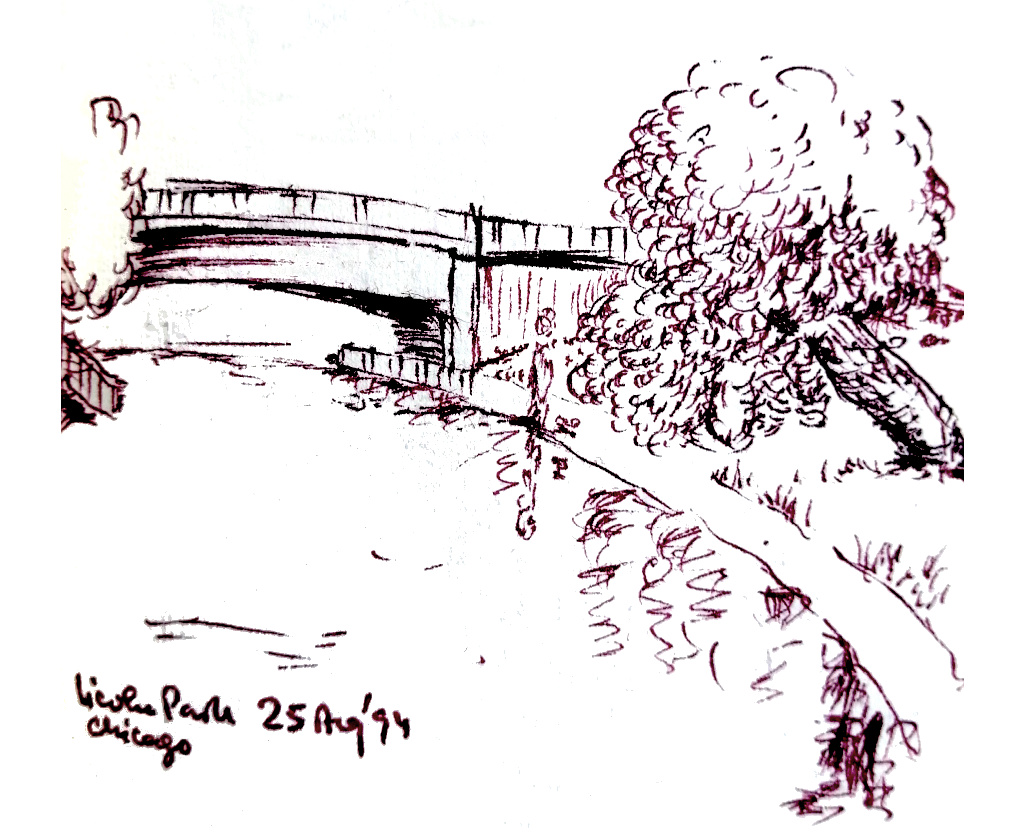
Living nearby with friends, I wandered through the park a couple of times. It was, in my opinion, like any other city park, with children, elderly people, sportsmen, and polite conversations. No crime scenes. That I can say for all of my lone wanderings in many places during any hours of the day or night in many states of the USA, some of them quite infamous. Perhaps I was just lucky, as I was in other notorious metropolitan places around the world with high crime rates. I had even some very humane experiences at places where you would least expect them. But that is a chapter for itself.
American media and Hollywood have, of course, a penchant for melodrama, which at some places may have unfortunately infected the young and even the police. A German reporter once accompanied a police raid in LA, with helicopters and a gamut of gadgets and personnel, to finally catch a young man with a few grams of weed! Tax money wasted, but a lot of melodrama and a story for the press. Despite that, I had wonderful, friendly experiences with the police in the USA, who I found quite civilized and protective, and at places very forthcoming and really concerned about my safety. And once, an undeniably parental attitude, which I experienced in Washington. Better than in my own birthplace, where, as a tourist later, I seemed to be back in the Middle Ages.
This may sound surprising to read today, when the news is full of ICE trespasses, and the social media equally full of accounts of decade-long harassment of divergent groups, underprivileged white, non-white, and black citizens by the police in some states, but it is my true experience. Times change, though, and today it may not be the same.
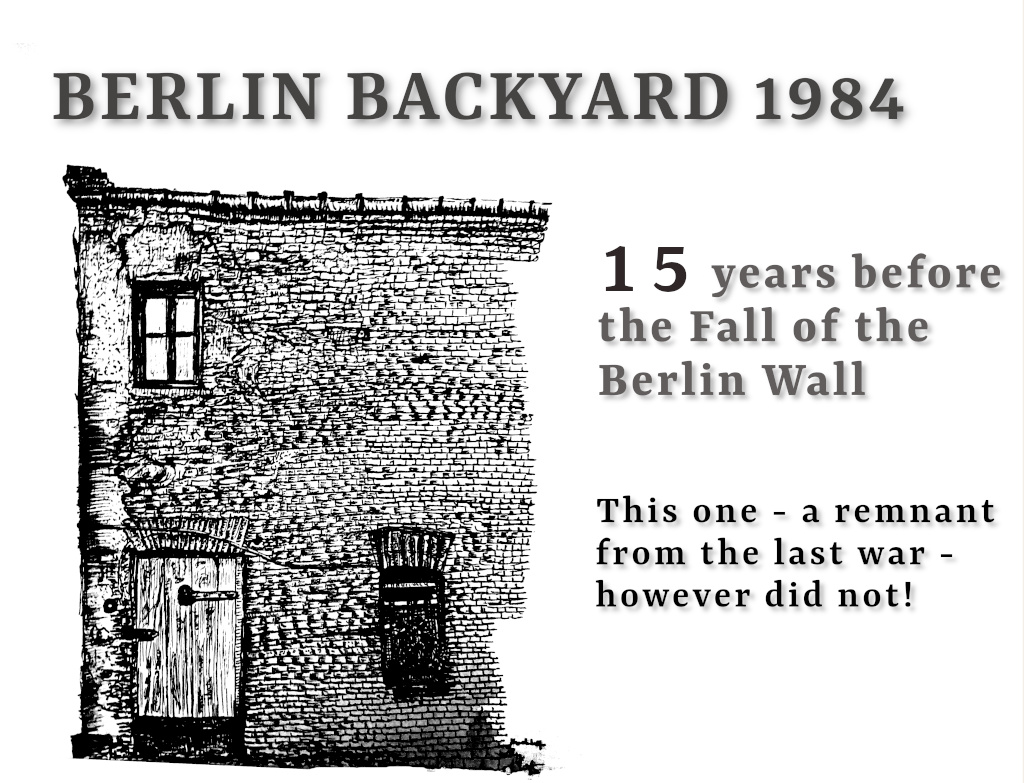
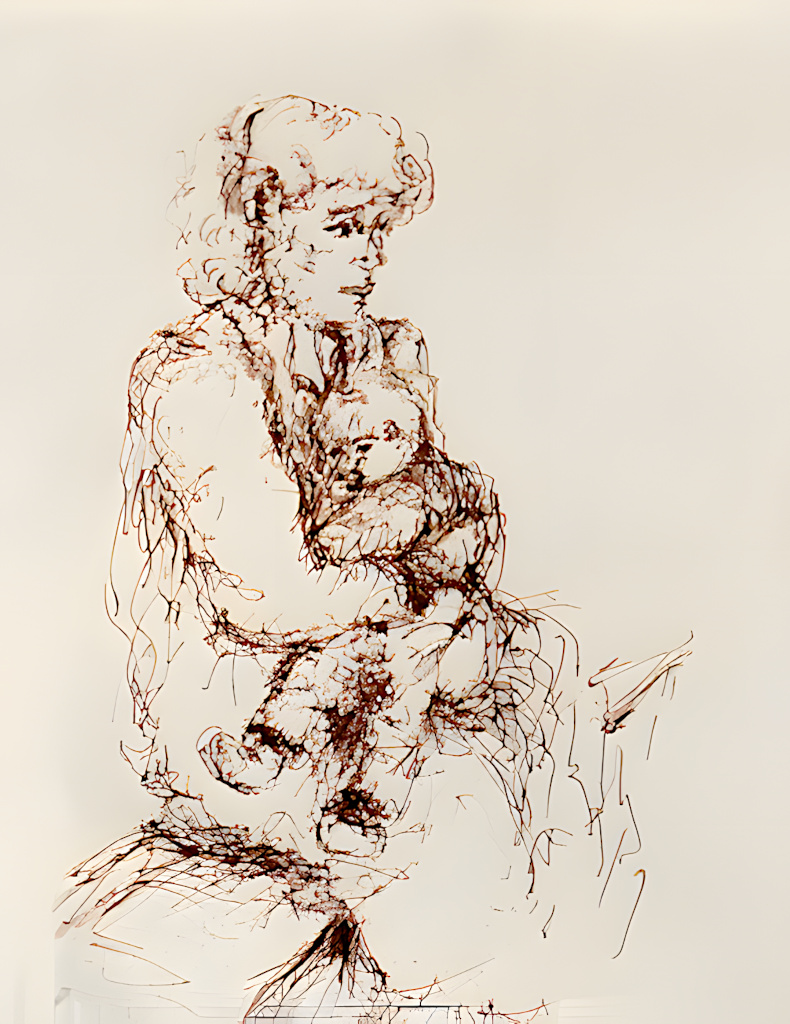
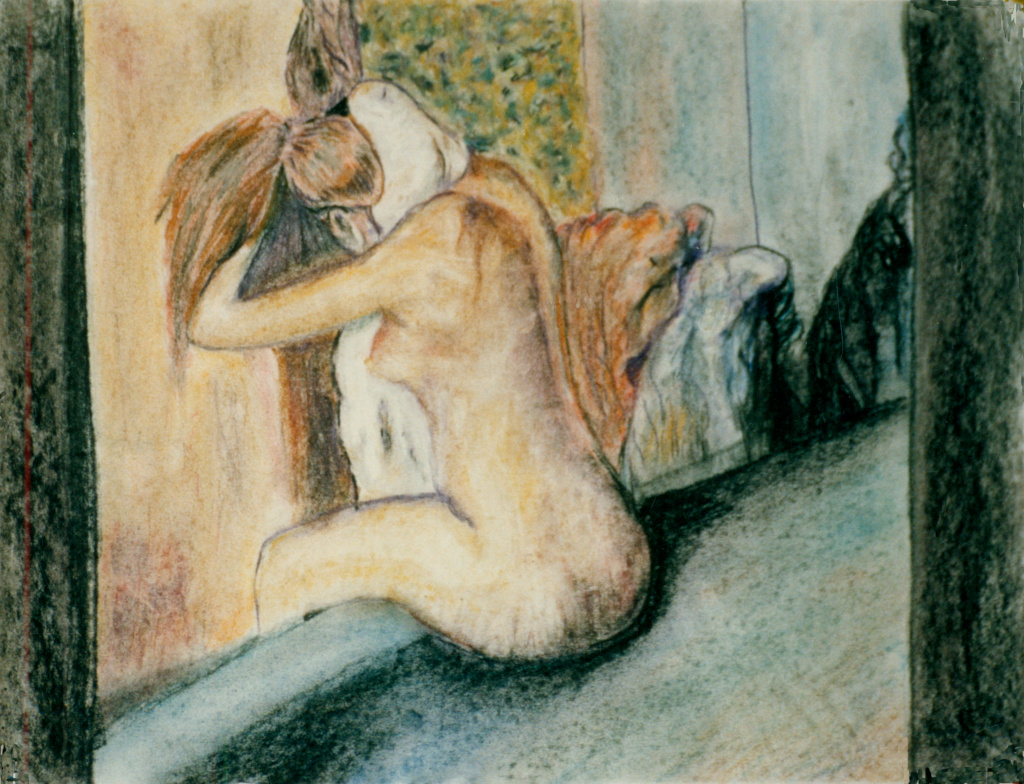
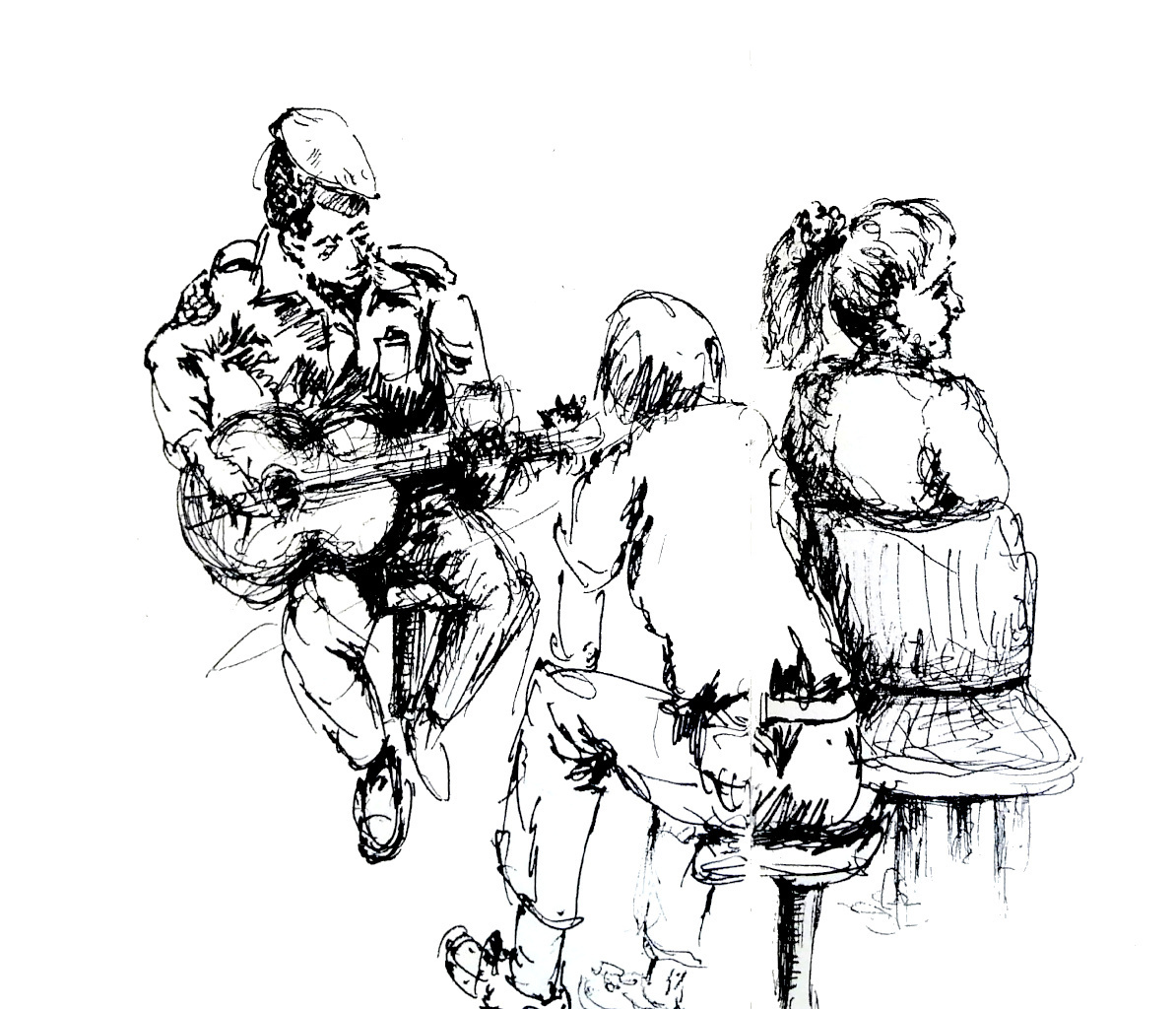
The only place where you saw a dynamic sign of life was at the bus station. This Bauhaus or refurbished Speer, dry, bile-less, blood-less, hormonless, cement monster of a city, reflecting the megalomaniacal fantasies of architects and marketing experts of the 20th Century, was a horror to behold, to walk or ride a bike around! And everywhere there was lifelessness. The only place where anything was going on was at the bus stations. Human voices, even a few birds chirping, and gratefully also music and singing, and where they had fruit markets. The fruits appeared to me like exotic imports in grey cemeteries, reminiscent of the apples in Soylent Green.
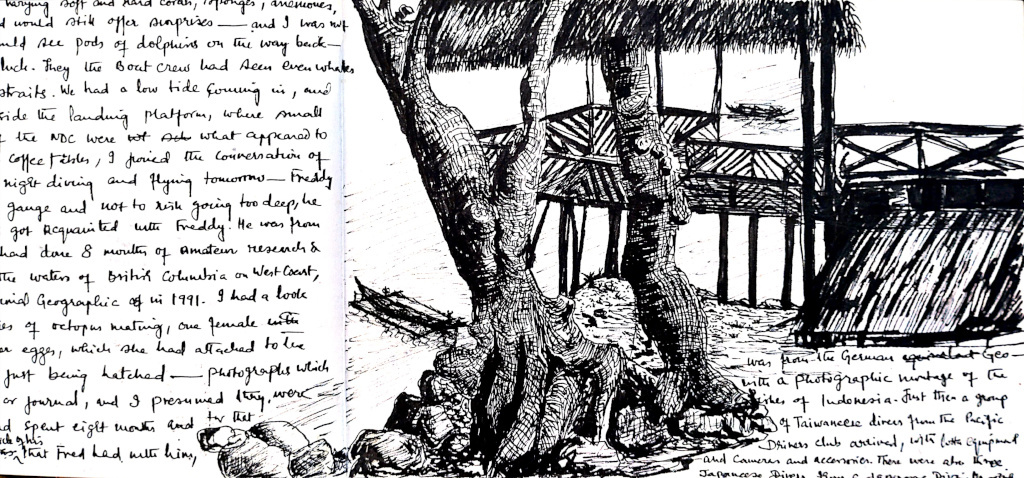
Bunaken. Sulawesi. This was a realization of one of my childhood dreams. To live for a while in a tree house. But more than I ever expected! Amidst a mangrove forest. The view is of the terrace of the house, which you accessed right from your bedroom at the top, and the jukung that I had rented. Paddling through the mangroves, snorkeling and diving, or simply sitting and writing or reading on the terrace, have been one of the dream-like experiences of my life. But more of that in my journal.
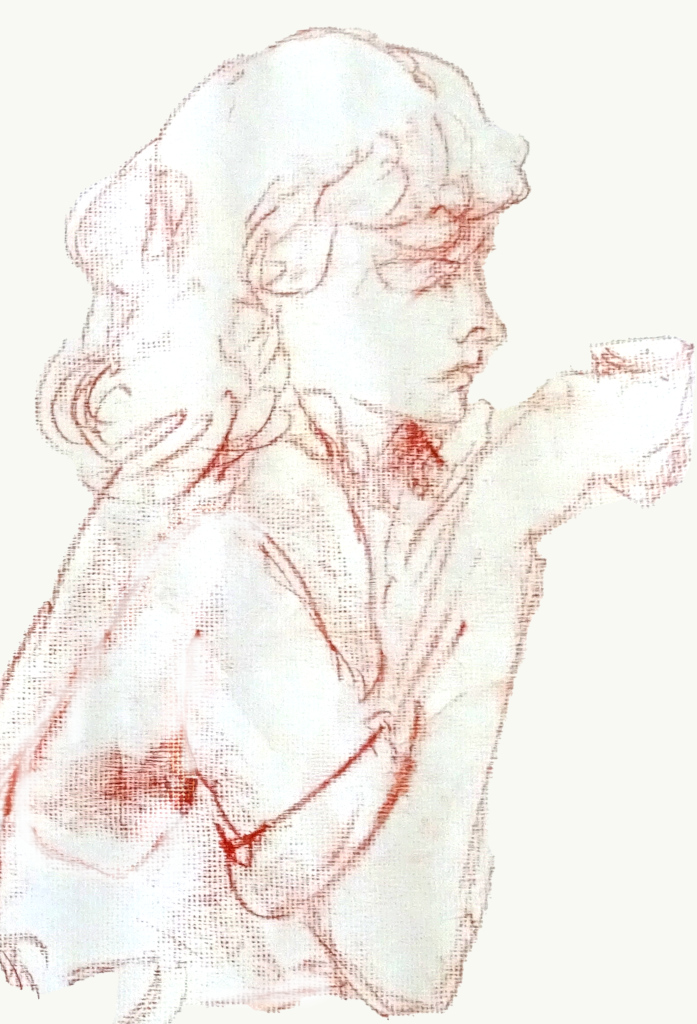
In school, our drawing teacher hung my watercolor drawing, depicting a rural scene of women threshing rice, on the wall of the drawing classroom. It was a better compliment than an award. And he wanted me to go into Visual Arts. However, I also had other dreams. Lots of them! I studied Physics, Chemistry, and Biology at the University of Kashmir.
But then, by coincidence, there was a construction going on just about 100 meters away from my home on the main road. They were extraordinarily fast compared to the usual local pace of construction, and by the time I had finished my first year at University, the building was up and ready for use. It turned out to be a private Academy of Arts. Very new, very unusual, and very progressive. And they were so good that years later, they got affiliated or taken over by the University. Well, being so near, it was of course tempting! Fortunately, they also had limited evening courses. My decade-long best friend, Masood Hussain, and I enrolled together for a variety of courses at the academy. Blessed with a genial artistic talent of a maestro, good looks, and a kind nature, Masood has deservedly won fame as an artist in India and Kashmir and later became a professor at the same institute. So after coming from the university, head full of math and natural sciences, it felt like a meditation to do courses in drawing, portraits, including nudes (male only, if I recall correctly), and lino cut. I did it for over a year or so, but that was the end.
Later in Germany, where I was now studying Social Anthropology, I was vacationing with my girl friend in a small beautiful thatched farmhouse in North Germany, that belonged to Bernd, my friend, godfather and much more, whom I met in Kashmir and who not only initiated my new life’s journey but has without a break supported it far last half a century! The place was an epitome of peace, though sometimes the winds can knock away huge tree branches or uproot the whole trees, if it pleases. With open, sparsely populated verdant green space, the sea and long beaches, and a nearby lake full of migratory birds, including that summer, a stray flamingo, the sun and peace somehow had some magical effect on me. I started drawing after a break of about 12 years and have never stopped. I must add that my girlfriend Angelika had a hand to play too, at the start and after. It was her drawing sketch pad and her materials that were present there at the right moment. Seeing my work, she was surprised, and the first thing she did back in Berlin was to buy drawing materials and drawing pads for me, and she kept supporting me in all ways possible for years thereafter.
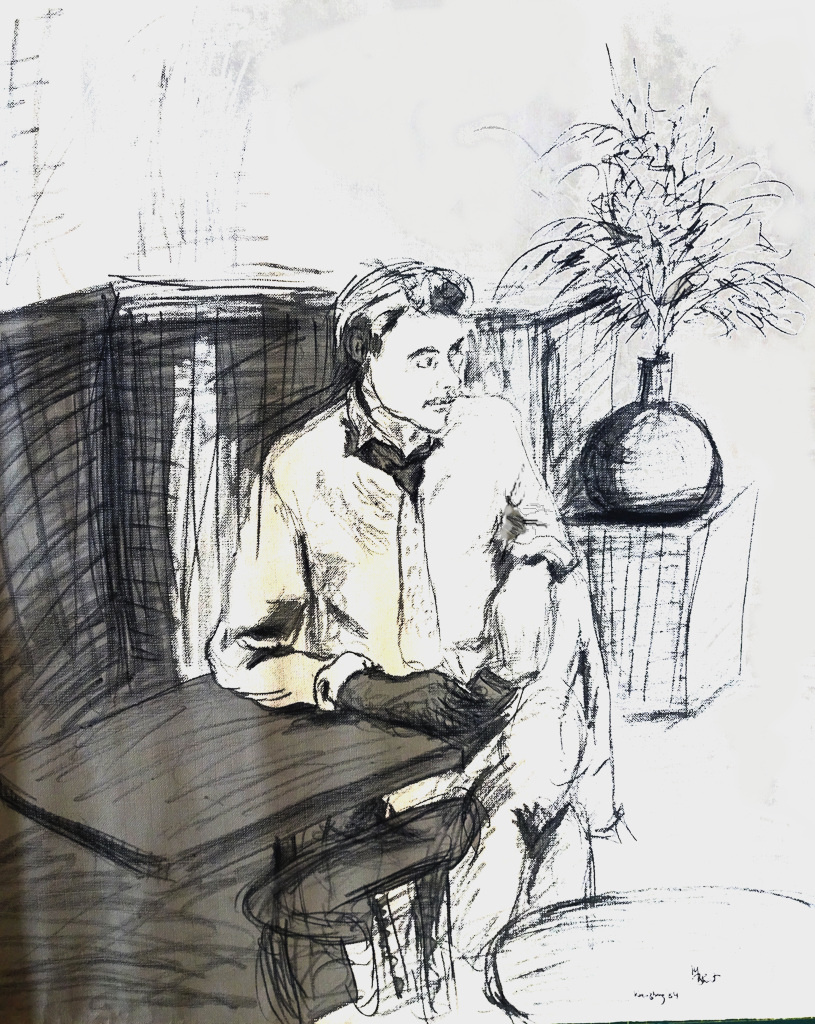
So to refresh my skills, or to gain new skills, like Etching, I took some classes in the Folkshochschulen, which Berlin generously offers its citizens of all ages. In one such class for drawings, we would all buy the cheap left-over rolls of wallpaper from local stores and walk around Kreuzberg, sketching the local scenes on the Spree Channel, visiting bars, restaurants, and ships, where we would roll out our wallpaper. It looked funny, but Berlin wouldn’t care less, and people enjoyed being portrayed and would often encourage us. One even offered me a beer in exchange for a charcoal painting of his. And often we would sketch each other when the place was empty. Annette was the most skilled of us all. I asked her why she felt she needed this course. She said she was too shy to make portraits like that when alone. She would often point out my mistakes and was immensely encouraging.
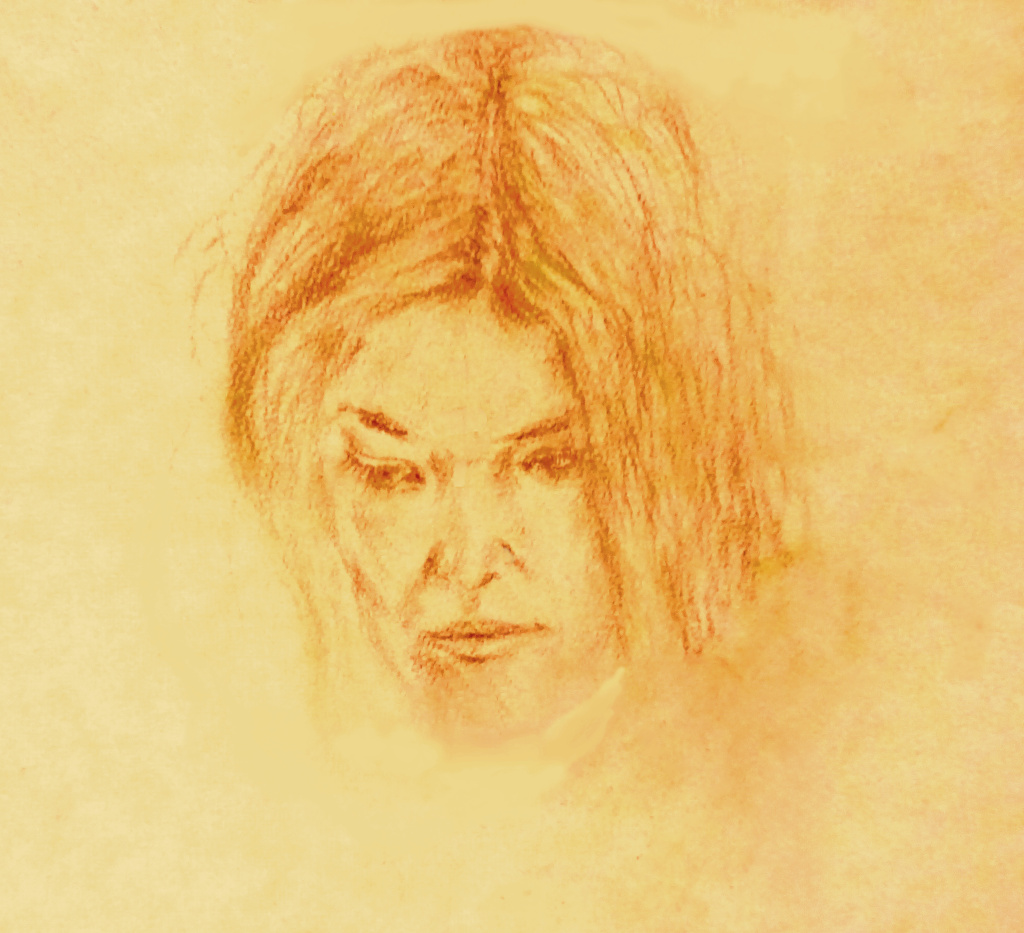
Sabina had somehow managed to retain her childhood innocence. Straightforward, witty, and humorous, often laughing, yet never at the expense of others, and one of the least biased persons, regarding social status, creed, or color, or language, and to top it, young and beautiful, she has etched a positive, durable memory in my life. The portrait, which I made of her in Freibourg, hardly does any justice to all that. It is meant more as a tribute than a portrayal.
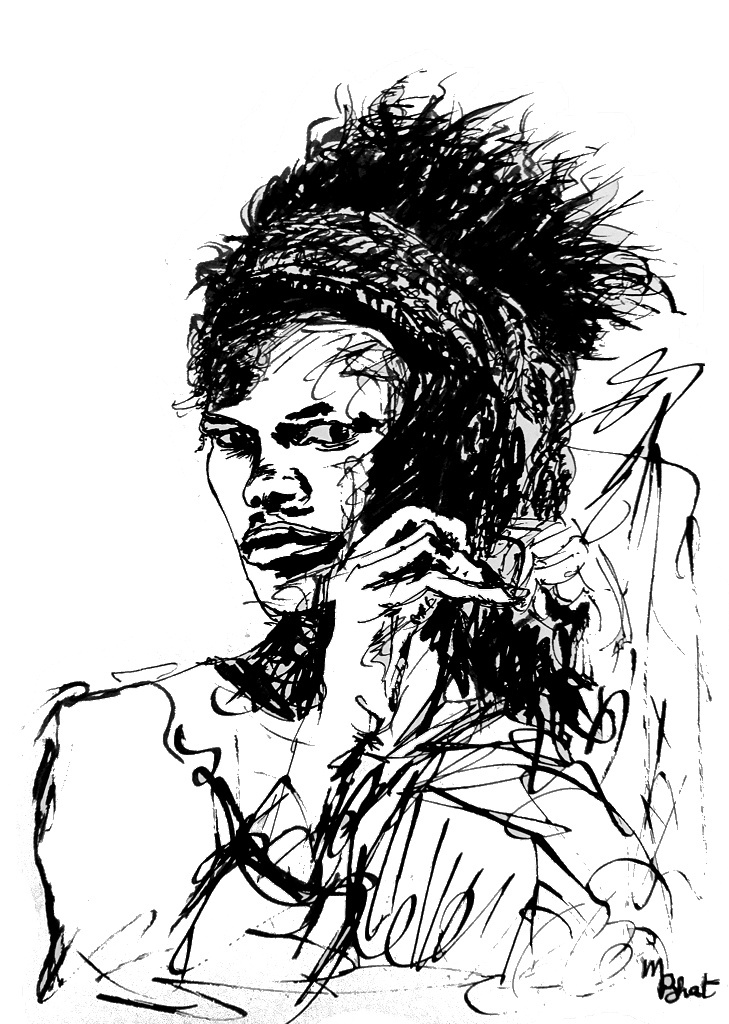

In the eighties, Berlin Kreuzberg, at that time subdivided into two district zones Bln36 and Bln62, was the Mecca of punks from Germany and no less the British punk bands. They would frequent certain pubs, especially the cafe X in Bln62 and the pubs and discos on the Oranien Strasse, in Bln36, which also had a gay scene and the first gay bar in Berlin. The trend with the punks was not speak much. An outward display of a lethargic, “Not interested! Don’t care! No desires!” If they ever spoke to you, it was to ask for a fag! But then you also have the exceptions.
Once, I left a bar late after midnight, a bit tipsy, and I had been drinking on an empty stomach. Next to the canal, there was a Turkish Kebab stall open. I got myself one and sat on a nearby bench to eat. There was only one other person around, and that was a young punk, sitting on the bank next to me. He did not ask for a fag. Somehow, we got into a conversation. It turned out that he had suddenly become homeless. He had been in prison for shoplifting and was released today. Coming back home to his girlfriend, he was shown the door. So he was now homeless and had not eaten. I brought him a Kebab. He talked about his alcohol addiction and his father in Hamburg. He was thinking about the possibility of moving in with one or another of his friends, but he did not know how long that would take. I had to hurry back home, as I had an early morning shift, and had to be at the airport at 6 am. So I told him loud and clear that he could stay with me, but he should try to find a place as soon as he can and not force me to kick him out. In the meantime, he could use anything in my kitchen. A convicted felon and an alcohol addict but I somehow had faith in him. He agreed. At home, I quickly made a bed from the sofa for him, showed him the kitchen, gave a couple of instructions, and finally gave him the key to my apartment. I told him I will go to sleep in my room and will be away to work soon. He should feel at home and use anything he wanted in the kitchen. So I went off soon to sleep.
As I told my Pan Am colleagues at the airport about it, most of them predicted that my apartment would be bereft of all the valuables. As I returned home late afternoon, there was nobody there. The sofa and the bed had all been made, and everything was spic and span. And on my table was a lovely letter with my apartment key on it!
I have the letter still with me. He wrote that he could have just robbed me, but my trust in him, he seemed to have realized, was exactly what he had needed in life. His father, a doctor in Hamburg, had absolutely no faith in him, he had told me during our conversation last night. I never saw him again. He had complimented me for being "in Ordnung", meaning OK and should remain so. I would have liked very much to tell him that his letter and his behaviour had proved that he was equally well "in Ordnung." I felt optimistic and was more or less convinced that the potential he had and that I saw in him would eventually come to fruition. I hope it did.
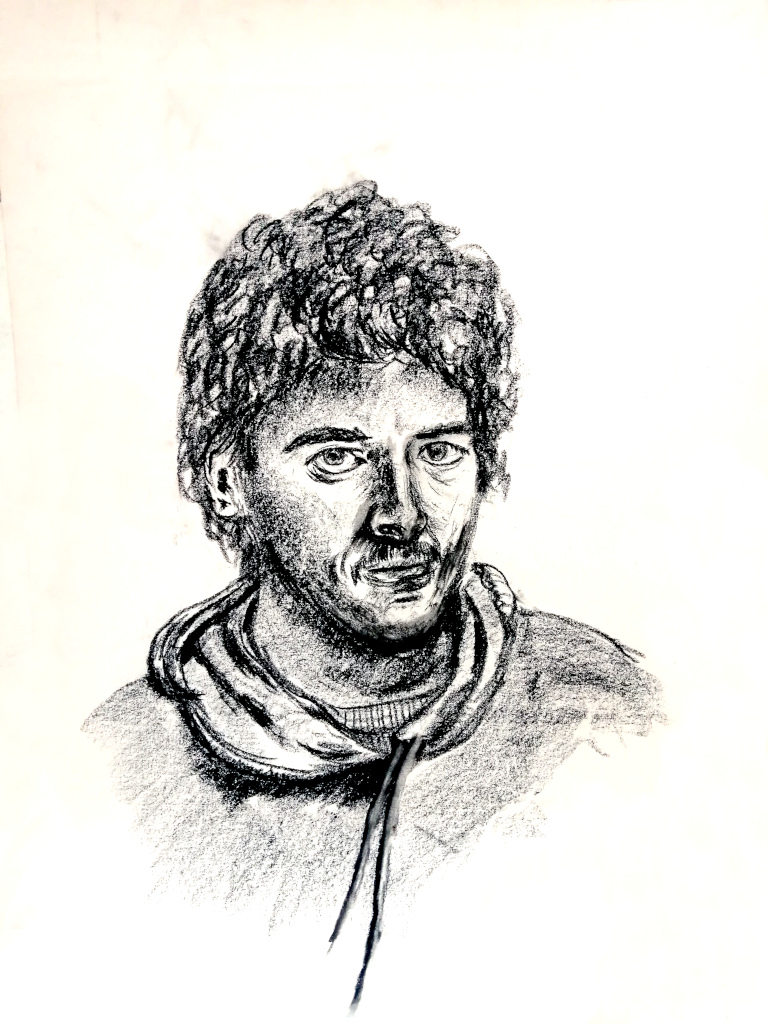
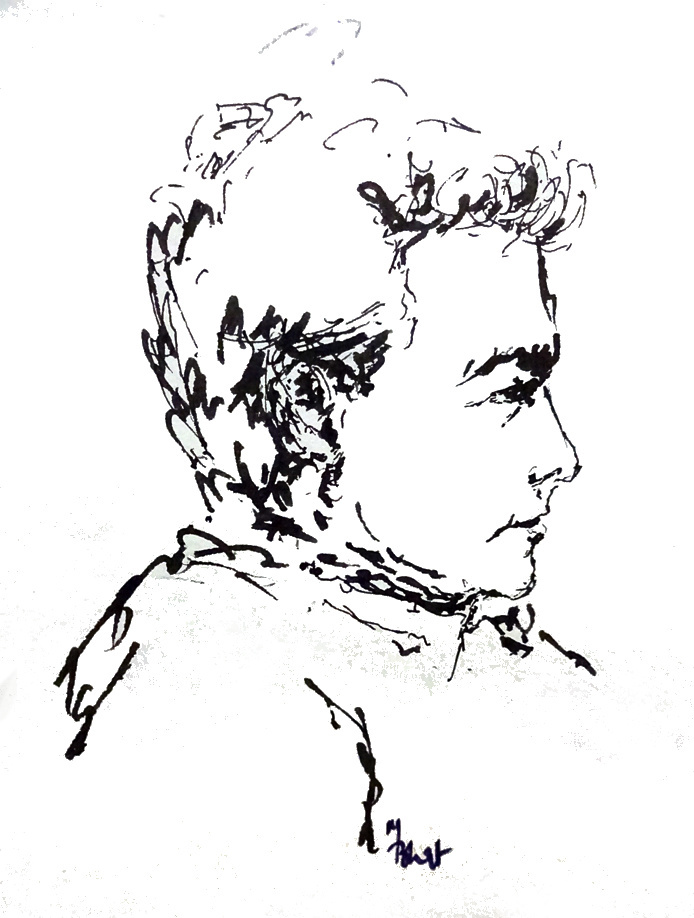
This sketch, however, is of someone _ a Berliner, who, along with his girlfriend, made some extra money by modeling at the Folkshochschule where I was taking a class two years earlier, before this episode.
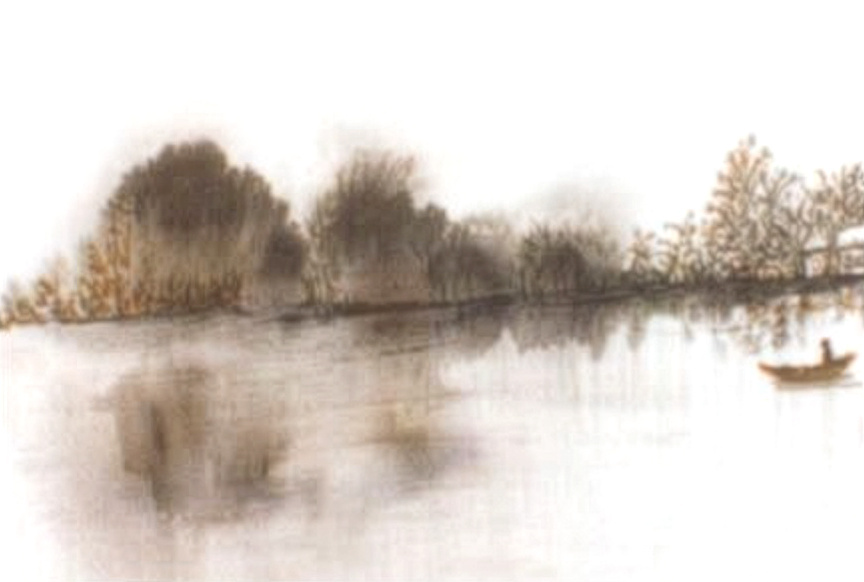
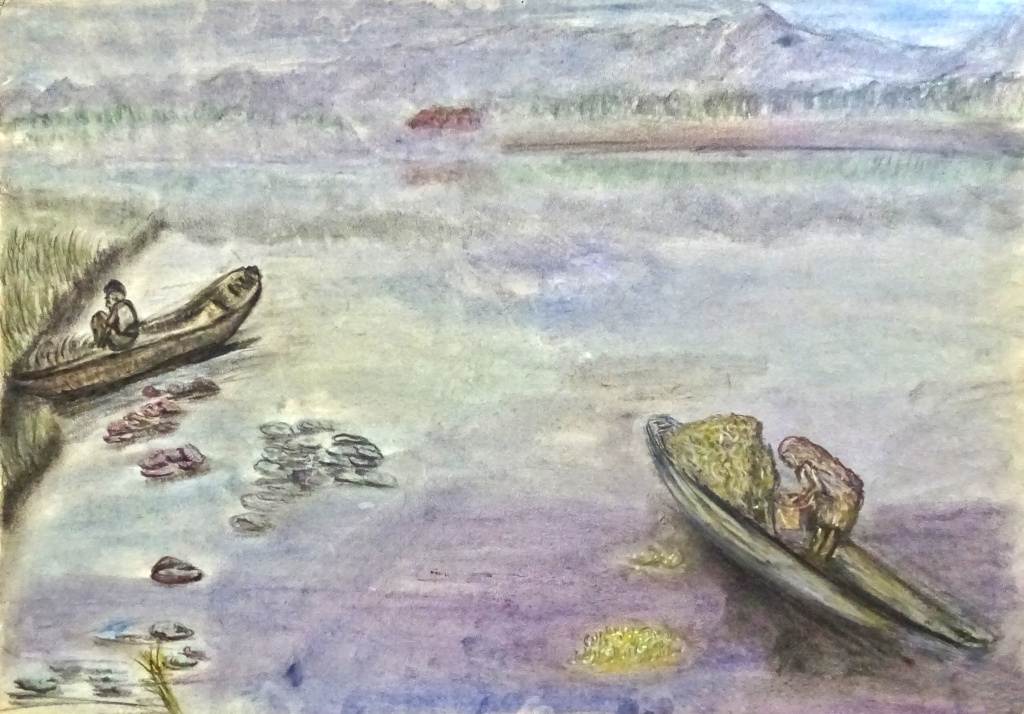
A picturesque lake in Srinagar, Kashmir. As a boy, I would go swimming and paddling here. And our school had its own “dockyard” for boats, where we would engage in all kinds of water sports, from boat racing to long-distance swimming. One funny competition was to sink the boat midway on the race track till it was fully submerged, display the bottom to the jury, and thereafter turn the boat around, manually scoop with palms and paddle, the water out, till the other crew members could safely board and then paddle onward to win the game. As I was a lightweight, I had to board the boat first. It was mad fun. Luckily, this passion of mine to go regularly swimming in natural lakes and not swimming pools was in no way constrained in my life later in Berlin, with its myriad lovely lakes. Schlachtensee became my substitute till the fall of the wall, after which you really had, what Germans wonderfully call the “Qual der Wahl”, the torture associated with having too many options.
In the wake of devouring lands, cultures, and people by the newly emerged European Trade Corporations, the Dutch, having set a successful example, the British corporate giant, the East India Company, would surpass everything that history had ever blessed mankind with. A totally new way of subjugation, unlike that of the Phoenicians or the Greeks, who too had predominantly mercantile interests in colonization. Everything, though, has two sides. In a way, certain things can be a blessing in disguise, even if at a specific moment in history, they may appear to be essentially bad and exploitive for the general populace. This is not, however, the place to discuss that. To continue our story, the British corporation defeated the powerful Sikh kingdom in 1846 but suffered heavy financial losses. So they sold Kashmir to the Rajput king, including, of course, our beautiful Dal Lake. However, the clever Rajput king soon decreed that no foreigners in Kashmir could buy land, afraid of the subtle European encroachments. This law has recently been revoked by the current Indian government.
So the British, in the meantime, accustomed to enjoying their holidays here, away from the scorching summer heat of the Indian plains, started renting house boats in the lake. The lake is now studded with lovely, costly cedarwood houseboats, with Kashmiri walnut woodwork, and English Chippendale interiors, and has become a Mecca for Indian tourists. Kashmir itself was the Mecca for Bollywood at the time. In the sixties, it became the favorite haunt of the hippies, smoking the pure local weed. An owner of one of the boats, during one of my visits later as a tourist, showed me a photoalbum, with him familiarly sitting around with the menbers of the Rolling Stones band, in his quite luxurious houseboat. And Led Zeppelin made a song about the valley. All that has, however, disappeared after the civil unrest starting in the late seventies. And the houseboat owners have a hard time scraping by, as the Indian tourist, the main source of their income, has literally disappeared, as I last visited the place in 2004.
Dal Lake is badly maintained, polluted, and becoming a cesspool of sewage and weeds. The aid from UNESCO for the cleanup was, as usual, channeled into bungalows for the local officials. A significant population of Srinagar lives and trades on water. They have markets and floating gardens, and the surrounding hills have some great medieval gardens and a botanical garden that once had the highest score on tulips in Asia. Lotus also grows in abundance here.
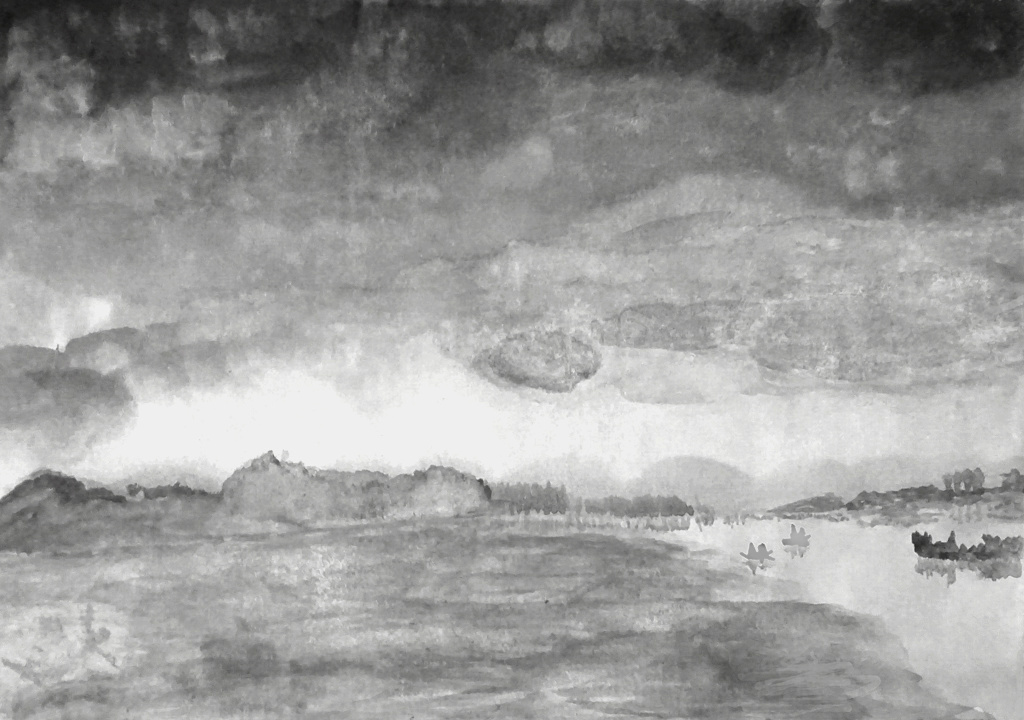
The river has a rich, at times violent, but also very romantic history. It originates in Kashmir, from a spring at Verinag, where you can see pundit scribes, holding long scrolls of parchment in their arms, that have the genealogies of the inhabitants of Kashmir inscribed on them. For a few rupees, they will look it up for you. They can trace your ancestry over centuries, assuming you are from the region. The river was called Vitasta, in Sanskrit, by the ancient Hindus, Hydaspes, the son of sea god Thaumos and Elketra, by the ancient Greeks, and had probably other names in prehistoric times. Alexander famously fought the Battle of Hydaspes on its banks.
The Jhelum has carved out a fertile basin that has supported millions of humans through the centuries and still does. It meanders through alpine forests with rich animal life, including monkeys, and here in my rather freely impressionistic drawing, along the wetlands connecting to an immense freshwater lake, the Wular. There still existed century-old wooden bridges along this river in Srinagar when I was young, giving it a picturesque medieval flair, more so with the extant colourful horse carriages. The bridges, however, have not been maintained and, despite the protests of the citizens, have been replaced by concrete, which, apart from ravaging the medieval flair, lasts far less than half a century, and even less than a decade when sand is surreptitiously substituted for cement.
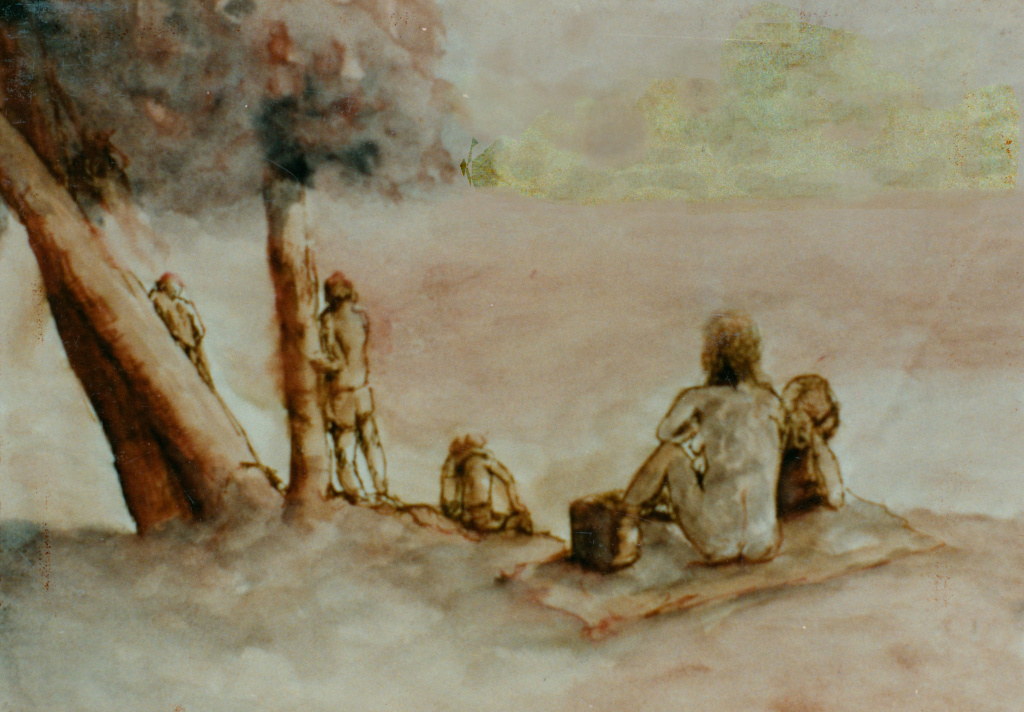
My go-to place for over a decade for swimming in the lake and biking in the neighboring forest. You can bike through the forest tracks to several adjacent lakes right up to the big Wannsee, where Einstein would go sailing, without having to use asphalt roads that much. And you hardly saw many people. In the eighties, I even got to know some school kids, neighbors, and some extremely friendly elderly people from the nursing home for seniors in the neighborhood. One would even bring me fruits and fresh bakery products. Another lady in a wheelchair would often claim that she had no air in her wheelchair tyres. I would pump air, and she would adamantly insist on giving me 10 DM as a student reward, as she called it. Sometimes I had this feeling that she might have been asking her caretaker, who wheeled her around, to deflate the tyre, so that she could reward me. She had, as a young woman, also done a lot of sketching, as a hobby, she told me. I had a whole lot of stuff with me. An inflatable paddle boat, drawing materials and blocks, books, food, coffee, and usual bathing stuff for the day. In the evening, I would smoke and paddle around, almost alone, and imagine elves dancing in the forest. It felt so isolated and far off from the crowded city suburbs, where I lived, though you did hear the cars and the suburban trains in between. It was peaceful and safe. I never watched over my belongings.
All that changed, however, in the nineties and especially after the fall of the wall. It gets really crowded in summer, especially on the weekends. You have to walk a lot to seek a place, watch your belongings, and the youngsters bring in their urban noise, music coming from latest amplifiers and bass boosters, one louder than the other, and you can’t hear a single bird chirp. Not to mention flinging beer bottles, when drunk, into the lake, where kids go swimming. I witnessed this radical change, within just a few years, and stopped coming, especially after I was once robbed of my backpack _ the first time in 40 years in Berlin _ and left with only my swimming trunks. I had apparently swum too far out, and by the time I returned, it was gone. I have to thank a group of American tourists and the highly tolerant social milieu of Berlin for managing to get back home to Berlin Mitte, the center of the city, where I was living at the time, without undue incidents, but that is a story for another time. Increases in population density, along with low employment rate, as well as the influx of people who find no jobs or are in for clandestine life-styles transforms even the most stable social milieu within a few years. Luckily, I found even more pristine lakes and forests in the east, which far surpassed what I had known so far, so it was a boon rather than a tragedy. Still, somehow, you do feel sad at the turn of the events and at the rapid change that had swept across many relatively intact social and ecological niches in Berlin, as it did here.
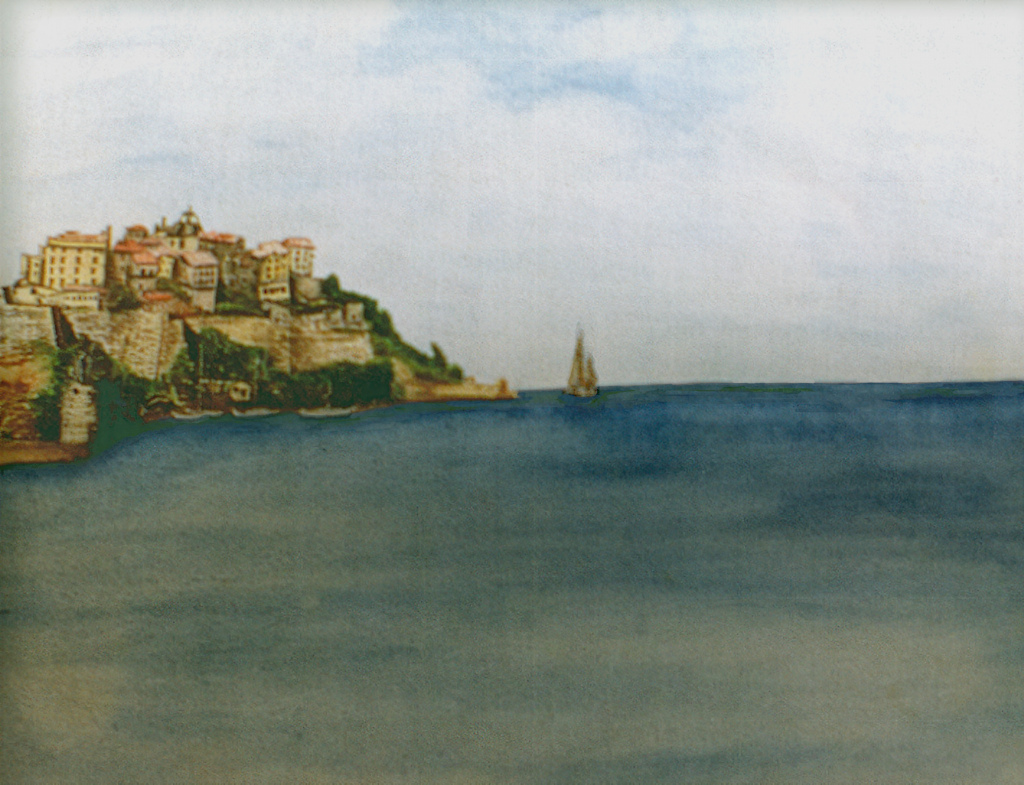
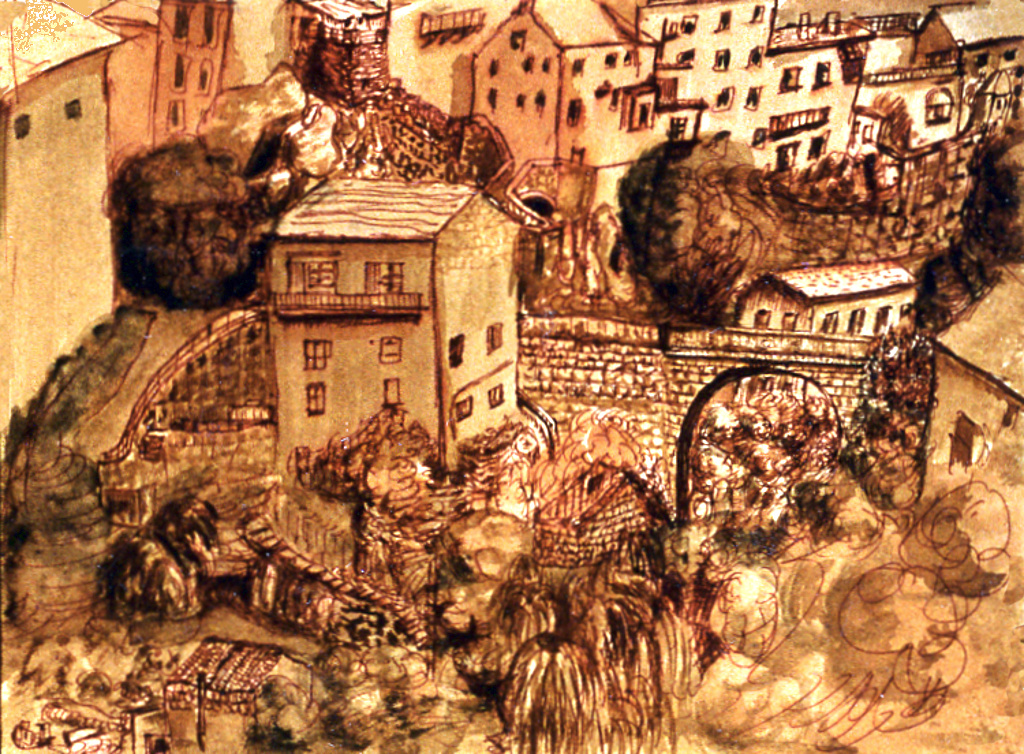
For those who wish to experience the European Renaissance firsthand, Florence is the ultimate destination. The city itself is a museum.
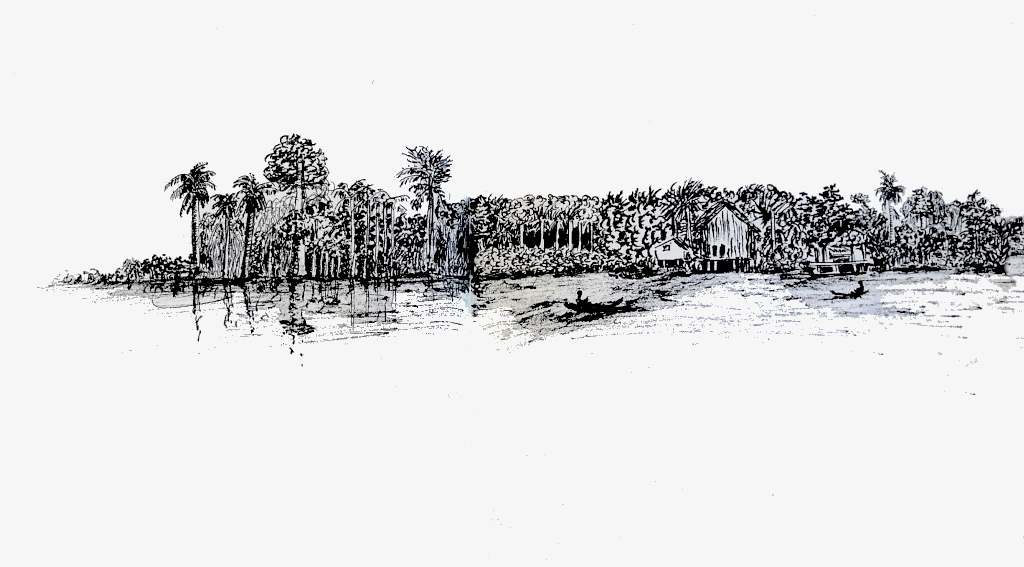
There strangely exists no special term for such an immensely huge and unparalleled body of water, like the Amazon River. Allegedly, there is more water here than in the Nile, Mississippi, Yangtze, and the next three biggest rivers combined!
Barco trip from Manaus to Belem, five days watching the shoreline, which may appear at the horizon or become invisible, when the width goes beyond few kilometers (can reach upto 11kms), and the view is hazy, and five nights swinging amongst bodies of humans in a hammock, gliding past this slumbering giant, and you get a picture of the colossal titanic nature of the slow-moving kinetic energy here, on which you are walking, sitting and sleeping. Calm and peaceful, only occasional ripples of wind seemed momentarily to disturb the utter peacefulness of the water flow. But the potential energy that lurks in this giant Neptunian creature, to imagine that is just mind-boggling. Human and human habitations and the human cargo all seemed to me to be somehow Lilliputian. Intimidating? For sure, and yet it had its own charms, besides the fascination that this superlative entity inevitably evokes. The sunsets and the sunrises, the vastness of the basin that the river drains, and the lush and verdant vegetation.
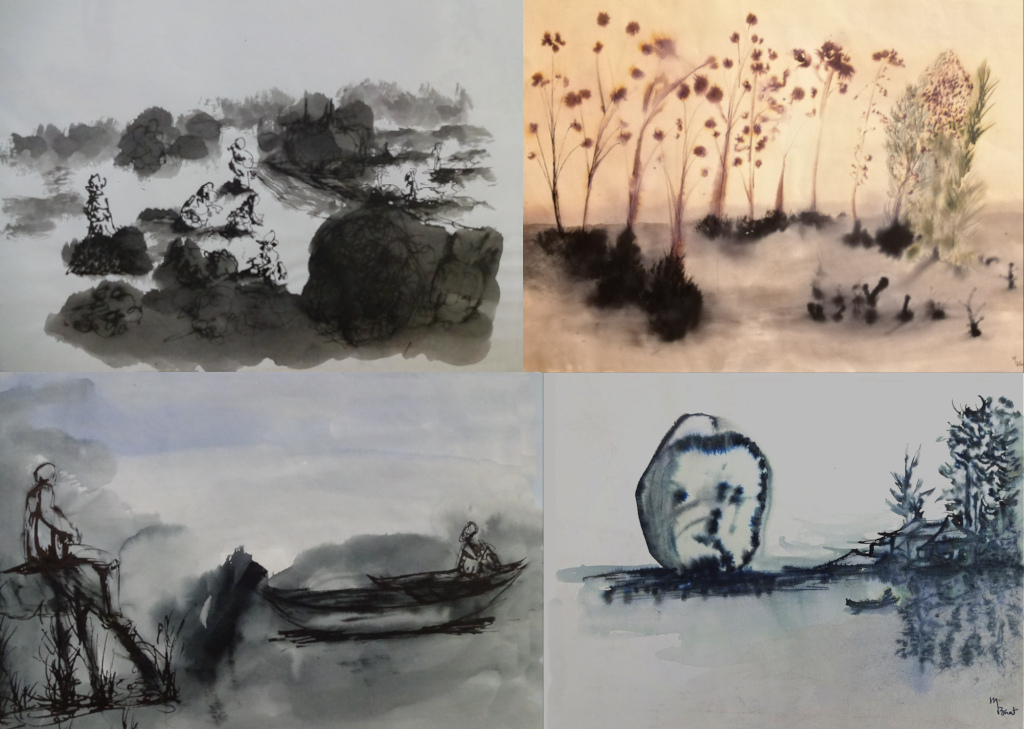
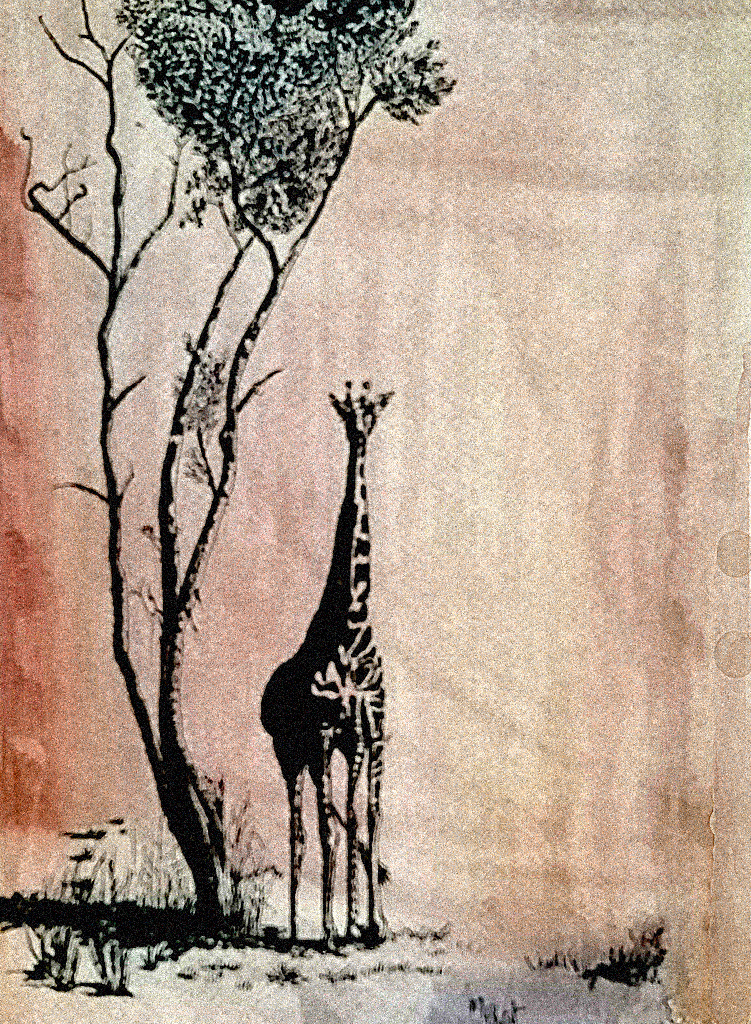
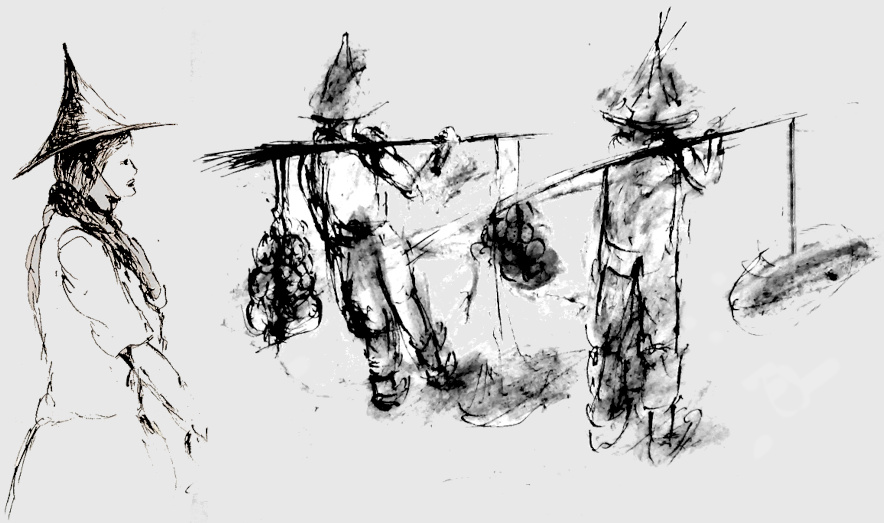
This webpage of drawings and episodic narratives would be incomplete without a depiction of the caping, or non-la or douli, as it is called in South East Asia, a ubiquitous headdress of the peasants in South East Asia and in the ancient Americas. In Africa, the Fulani (fani) and in India, the Assamese (jaapi) wear them too. In medieval Europe understandbly it was adopted by the aristocracy as a sign of social status (hennin) since the peasants did not need protection from the sun. In ancient Americas it was made from woven fibre or bentwood and was associated with social status. But everywhere else, it is made of natural indigenous plants, palm, bamboos and straw, and is used for practical purposes, as a protection from sun and heavy tropical rains and wind. You see them everywhere in the paddy fields. They are more or less iconic representations of Asian rural life.
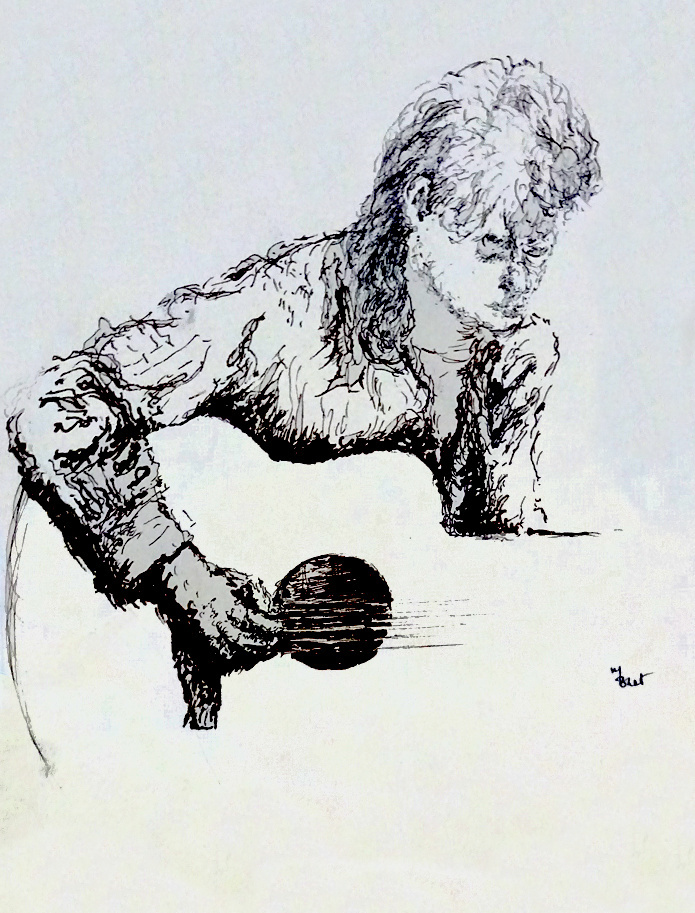
A linguistically and culturally heterogeneous dude, like me, originally from Rome, who had lived in London and had become a sort of Kreuzberger, just as JFK was a Berliner. Maximo was a musician, to whom I had the pleasure of introducing one night a small segment of Vivaldi’s phenomenal, genial, and prodigious works on almost any conceivable instruments of the time. And boy, what a night that was! The time flew literally in nanoseconds, till another guitarist friend of mine rang the doorbell and I discovered that it was the afternoon of the next day!